
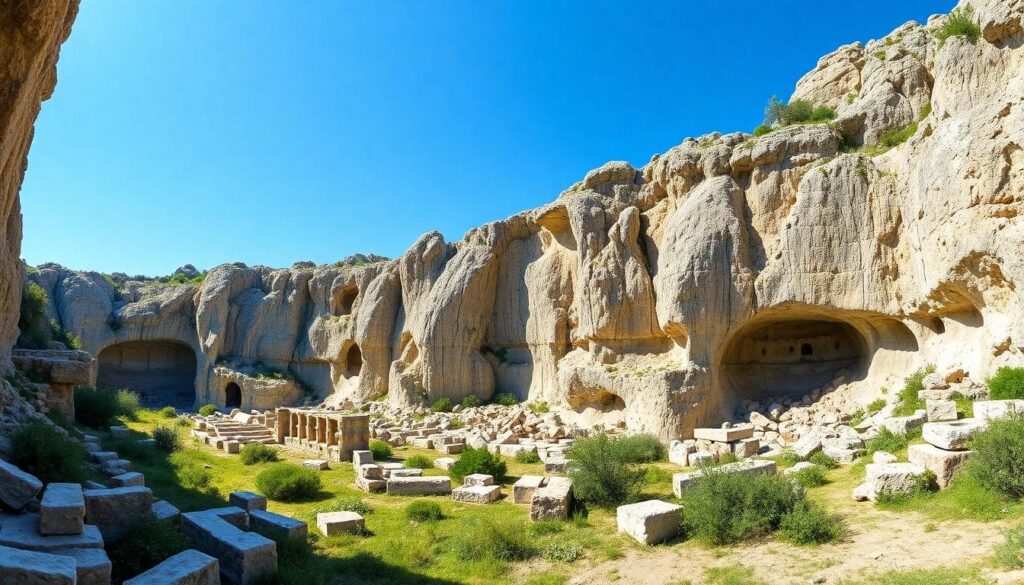
Nestled in the heart of Sicily, the Cave di Cusa offers a fascinating glimpse into ancient quarrying practices. These remarkable stone quarries date back to the 5th century BC, showcasing the ingenuity of the ancient Greeks who sourced materials for their architectural masterpieces. Visitors are drawn to the site’s impressive rock formations and the remnants of unfinished columns, which tell stories of ambition and craftsmanship.
Exploring Cave di Cusa is more than just a journey through history; it’s an adventure into the very essence of Sicilian culture. The site captivates with its tranquil surroundings and stunning landscapes, making it a perfect destination for history buffs and nature lovers alike. As one of Sicily’s hidden gems, Cave di Cusa invites exploration and appreciation, revealing the artistry of a bygone era.
Overview of Cave Di Cusa
Cave di Cusa, known as Rocche di Cusa, stands as an ancient Greek rock quarry located in Sicily, Italy. This significant site lies approximately 17 km northwest of the ancient city of Selinunte, a crucial Megarian colony in classical antiquity. It forms part of the Archaeological Park of Selinunte, linking it to an expansive historical context.
The quarry has roots dating back to the first half of the 6th century BC. It played a vital role in the construction of Selinunte’s renowned temples. Cave di Cusa yielded high-quality calcarenite, a limestone prized by the ancient Greeks for crafting monumental structures. Artisans used this material to carve large columns, façades, and other architectural elements, showcasing exceptional workmanship.
Distinct features within the cave include unfinished columns, which provide insights into ancient Greek quarrying techniques. These monumental yet incomplete designs highlight the scale of ambition behind Selinunte’s architectural endeavors. The quarry’s landscape reveals a network of rock formations, illustrating how the extraction process shaped both the environment and the structures built from the quarry’s materials.
The abandonment of Cave di Cusa occurred abruptly in 409 BC, prompted by the devastating Carthaginian invasion of Selinunte. This pivotal event led to the cessation of quarry operations, leaving the site preserved as a testament to a bygone era. The lack of subsequent development has contributed to its historical integrity, allowing visitors to appreciate the raw beauty and significance of this ancient site.
Visitors to Cave di Cusa encounter a blend of history and natural environment. This quarry has become an intriguing location for historians, archaeologists, and tourists alike. The site’s preservation offers a unique perspective on ancient craftsmanship and the socio-political circumstances that shaped its history.
Cave di Cusa, with its remarkable structures and serene surroundings, continues to serve as an educational resource. Its enduring legacy emphasizes the ingenuity of ancient Greek architecture in utilizing local resources, making it a must-visit destination in Sicily for those seeking to explore the region’s rich archaeological heritage.
Historical Significance

Cave di Cusa, an ancient stone quarry in Sicily, holds immense historical value. Its contributions to architecture and ancient quarrying techniques reveal the ingenuity of the ancient Greeks.
Ancient Quarrying Techniques
Ancient Greeks demonstrated remarkable proficiency in quarrying techniques at Cave di Cusa. Workers employed precise tools such as chisels and hammers for extracting high-quality calcarenite. Techniques included cutting stone blocks while exploiting natural fissures to facilitate easier removal. The unfinished columns, left in situ, showcase these techniques, providing insights into the methods and processes used in ancient stone extraction.
Contributions to Architecture
Cave di Cusa significantly impacted the architectural landscape of Selinunte. The quarry supplied calcarenite for the construction of the colony’s majestic temples, reflecting the aesthetics of ancient Greek architecture. The stone’s durability and workability allowed artisans to craft monumental structures that have stood the test of time. The preserved site, with its unfinished stone blocks, offers a unique glimpse into the architectural ambitions of the Greeks and the sudden halt of construction due to the Carthaginian invasion in 409 BC. This historical interruption enhances the site’s allure for historians and architects alike, emphasizing the rich architectural heritage derived from local resources.
Geographical Location

Cave di Cusa, also known as Rocche di Cusa, is situated in Sicily, Italy, approximately 3 kilometers south of Campobello di Mazara, in the province of Trapani. The site offers visitors a unique glimpse into ancient quarrying practices and the historical significance of the region.
Accessing Cave Di Cusa
Accessing Cave di Cusa involves utilizing roads that connect Campobello di Mazara and the nearby archaeological sites. The site rests about 17 kilometers northwest of the ancient Greek city of Selinunte, part of the Archaeological Park of Selinunte. However, as of October 2024, a notice indicates that Cave di Cusa is permanently closed, though this status may change.
- Selinunte: Located just 13 kilometers southwest of Cave di Cusa, Selinunte is one of the largest and most significant ancient Greek cities in Sicily. Visitors can explore impressive temples and numerous archaeological remains that highlight the region’s rich historical landscape.
Visitor Experience

Cave di Cusa offers a captivating journey into ancient history. Visitors encounter a remarkable archaeological site marked by its historical significance and stunning preservation.
Guided Tours and Accessibility
Guided tours provide an in-depth exploration of the Archaeological Park of Selinunte and Cave di Cusa. These tours enhance the visitor experience, offering insights into the quarry’s historical context and the techniques used by the ancient Greeks. Accessibility to the site involves roads connecting Campobello di Mazara and nearby archaeological landmarks. While the site remains permanently closed as of October 2024, visitors should monitor updates for potential changes regarding accessibility.
- Plan Visit: Choose to visit during the early morning or late afternoon for optimal light and fewer crowds.
- Wear Comfortable Shoes: Use sturdy footwear suitable for uneven terrain and rock surfaces.
- Bring Water: Stay hydrated while exploring the expansive site, especially during warmer months.
- Stay Aware: Observe safety guidelines to ensure a secure visit.
- Take Photos: Capture the unique columns and rock formations for a memorable experience.
Conservation Efforts
Cave di Cusa requires ongoing conservation due to its historical and archaeological importance. The site’s preservation is crucial for maintaining its integrity and showcasing ancient quarrying techniques.
Importance of Preservation
Preserving Cave di Cusa holds significant value because it provides an unaltered representation of ancient quarrying practices. The site’s abandonment in 409 BC during the Carthaginian invasion offers a rare snapshot of the techniques used, allowing researchers and visitors to understand the historical context of the workers’ craftsmanship.
Ongoing Projects and Initiatives
Ongoing conservation initiatives focus on maintaining the quarried stone blocks and surrounding landscape as part of the Archaeological Park of Selinunte. While specific details on current projects are limited, research on various polymer formulations aims to enhance the protective measures for stone samples. These scientific inquiries demonstrate a dedicated effort to ensure the site’s longevity and protect its unique archaeological features.
Conclusion
Cave di Cusa stands as a remarkable testament to ancient Greek ingenuity and craftsmanship. Its preserved state offers a rare glimpse into the historical significance of quarrying practices that shaped monumental architecture in Sicily. Visitors are drawn not only to its stunning rock formations but also to the stories embedded in the unfinished columns that echo the ambitions of a bygone era.
While currently closed, the site’s ongoing conservation efforts highlight the importance of maintaining its integrity for future generations. Exploring Cave di Cusa is more than a journey through history; it’s an invitation to appreciate the artistry and resourcefulness of ancient civilizations. As interest in this unique site grows, it remains a hidden gem waiting to be rediscovered.