
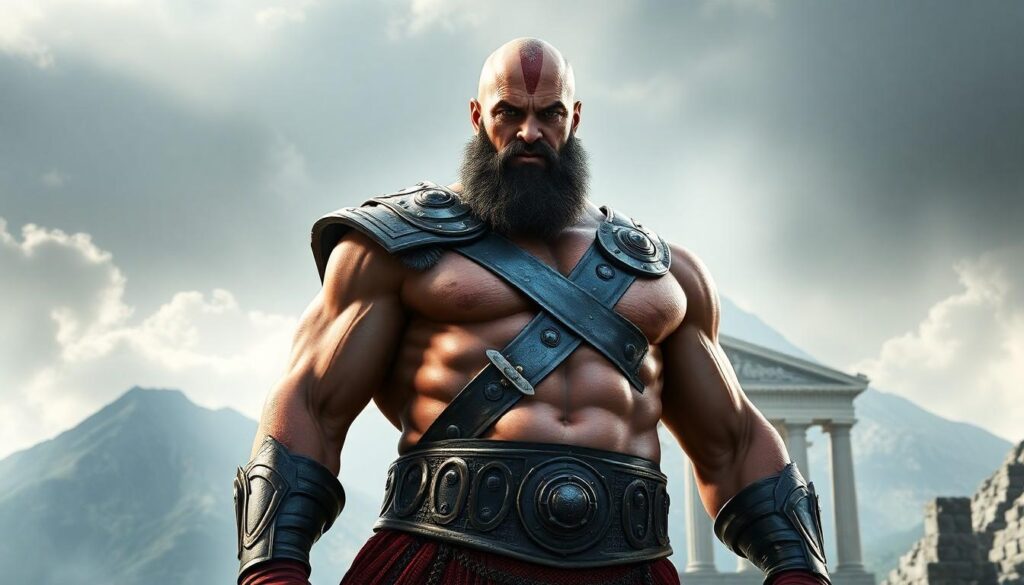
In ancient Greek mythology, Kratos is a powerful deity who personifies strength, dominance, and sovereign might. As one of Zeus’s most trusted enforcers, he serves alongside his siblings Bia (Force), Nike (Victory), and Zelus (Zeal), helping maintain order in the divine realm.
While Kratos might be better known today as the protagonist of the popular video game series “God of War,” his mythological roots run deep in classical literature. His name literally translates to “Power” or “Strength” in Greek, and he first appears in Aeschylus’s tragic play “Prometheus Bound,” where he carries out Zeus’s command to chain Prometheus to a mountain as punishment for giving fire to humans.
Who Is Kratos in Greek Mythology
In Greek mythology, Kratos represents strength and power as a minor deity serving Zeus. His role as one of Zeus’s winged enforcers establishes him as crucial in maintaining divine order.
Origins and Family Lineage
Kratos emerged from the union of the Titan Pallas and Oceanid Styx, creating a powerful divine lineage. His siblings include:
- Nike governs victory in athletic and military pursuits
- Bia embodies force and raw violence
- Zelus personifies dedication and rivalry
The family’s allegiance to Zeus during the Titanomachy earned them a permanent residence on Mount Olympus. Styx’s strategic decision to support Zeus’s faction first, bringing her four children to his cause, secured their elevated position in the divine hierarchy.
- Direct enforcement of Zeus’s divine will
- Command over aspects of strength and power
- Privileged status among Zeus’s trusted agents
| Aspect | Detail |
|---|---|
| Divine Classification | Minor Deity/Demigod |
| Primary Domain | Strength and Power |
| Residence | Mount Olympus |
| Allegiance | Zeus and Olympians |
Kratos as the Personification of Strength

Kratos embodies raw power in Greek mythology as the divine personification of strength. His name directly translates to “strength” or “power” in ancient Greek, reflecting his fundamental nature as one of four children born to the Titans Pallas and Styx.
Relationship With Zeus
Kratos maintains an unwavering loyalty to Zeus, demonstrated through significant actions:
- Sided with Zeus during the Titanomachy, following his mother Styx’s decision to join the Olympian forces
- He received divine offices as a reward for his allegiance to Zeus
- Serves as Zeus’s enforcer alongside his siblings Nike (Victory), Bia (Force), and Zelus (Zeal)
- Executes Zeus’s commands without question or hesitation
- Functions as a critical enforcer of Zeus’s divine will
- Maintains order among the gods through displays of strength
- Operates alongside his siblings as part of Zeus’s inner circle
- Oversees matters requiring the application of divine strength
- Represents the physical manifestation of power in Olympian affairs
Famous Mythological Stories Featuring Kratos

Kratos appears in several significant Greek myths, demonstrating his role as Zeus’s powerful enforcer. His most notable appearances showcase his unwavering loyalty to Zeus through acts of divine strength.
The Binding of Prometheus
Kratos takes center stage in Aeschylus’s play “Prometheus Bound,” where he demonstrates his ruthless dedication to Zeus’s commands. Alongside his sister Bia, Kratos forces the reluctant Hephaestus to chain Prometheus to a remote rock in Scythian land. This punishment comes after Prometheus steals fire from the gods to give to humanity, defying Zeus’s authority. Kratos’s brutal efficiency in carrying out this task cements his reputation as Zeus’s ruthless enforcer.
Battle Against the Titans
During the Titanomachy, the great war between the Olympian gods and the Titans, Kratos plays a crucial role in securing victory for Zeus. His alignment with the Olympians, alongside his siblings Nike (Victory), Bia (Force), and Zelus (Zeal), proves instrumental in overthrowing the Titans. This loyalty earns Kratos and his family permanent positions on Mount Olympus, establishing their status as trusted divine enforcers in Zeus’s regime.
Differences Between Mythological Kratos and God of War

The mythological Kratos differs significantly from the popular video game character that shares his name. These distinctions span various aspects, from origin stories to personality traits.
Historical Accuracy vs Creative License
The mythological Kratos is Zeus’s loyal enforcer, maintaining unwavering allegiance to Olympian authority. Ancient Kratos executes Zeus’s commands without rebellion, unlike his video game counterpart. Historic texts depict him as the son of Titans Pallas and Styx, contrasting with the game’s portrayal of him as a Spartan warrior. In ancient mythology, Kratos operates alongside his divine siblings Nike, Bia, and Zelus, showcasing collaborative divine enforcement rather than the lone warrior narrative presented in modern adaptations.
Modern Pop Culture Interpretations
The God of War franchise reimagines Kratos as a vengeful Spartan warrior seeking retribution against the gods. This interpretation transforms the original deity of strength into an anti-hero character, departing from his mythological role as Zeus’s steadfast ally. The video game series incorporates elements from Greek mythology but alters key aspects of Kratos’s character:
| Mythological Aspect | God of War Adaptation |
|---|---|
| Loyal to Zeus | Seeks revenge against Zeus |
| Divine being | Former mortal warrior |
| Works with siblings | Acts independently |
| Enforces divine order | Disrupts divine hierarchy |
| Son of Pallas and Styx | Spartan origin story |
The modern interpretation expands Kratos’s narrative beyond his limited mythological appearances, creating a complex character that resonates with contemporary audiences while diverging from classical Greek mythology.
Legacy and Influence in Ancient Greece
Kratos’s impact on ancient Greek religious and cultural traditions stems from his role as a divine enforcer of Zeus’s authority. His presence in Zeus’s court alongside his siblings Nike, Bia, and Zelus established a complete system of power dynamics in Greek mythology.
The portrayal of Kratos in Aeschylus’s tragedy “Prometheus Bound” shaped the ancient Greek understanding of divine authority. In this influential work, Kratos embodies uncompromising strength and unwavering loyalty to Zeus’s commands, demonstrating the consequences of defying divine order.
Critical aspects of Kratos’s mythological significance include:
- Representation of absolute power through his name “Kratos,” meaning strength
- Establishment of divine hierarchy by serving as Zeus’s primary enforcer
- Symbolization of authority through his permanent residence on Mount Olympus
- Integration of power dynamics in religious ceremonies honoring Zeus
The alliance between Kratos’s family and Zeus during the Titanomachy created this divine structure:
| Family Member | Divine Office | Role Under Zeus |
|---|---|---|
| Kratos | Strength | Chief Enforcer |
| Nike | Victory | Military Success |
| Bia | Force | Physical Power |
| Zelus | Zeal | Divine Devotion |
Ancient Greek religious practices incorporated Kratos’s attributes in:
- Temple dedications honoring Zeus’s authority
- Religious ceremonies emphasizing divine power
- Political symbolism representing state strength
- Military rituals invoking divine might
- Hierarchical authority in governance
- Absolute power in leadership
- Divine right in rule enforcement
- Strength as a cornerstone of order
Conclusion
Kratos is a compelling Greek mythology figure who embodies pure strength and unwavering loyalty to Zeus. His role as a divine enforcer alongside his siblings helped maintain order in the celestial realm while establishing crucial power dynamics among the gods.
Though modern interpretations like the “God of War” series have reimagined his character, the original mythological Kratos remains a testament to the ancient Greeks’ understanding of power, authority, and divine hierarchy. His enduring legacy fascinates scholars and enthusiasts, demonstrating the timeless appeal of Greek mythology’s complex divine figures.