

Medieval knighthood wasn’t merely about wielding a sword or riding into battle under a noble banner. It was a lifestyle forged by discipline, duty, and a code of conduct that elevated warriors into symbols of honor and virtue. This medieval knight code, rooted in Christian values and feudal loyalty, laid the foundation for what we now recognize as chivalry.
The following 7 warrior rules reveal the moral framework and battlefield ethos that molded the rules of knighthood during the Middle Ages. These weren’t just abstract ideals; they were lived principles—guiding behavior in times of war, peace, love, and faith.
1. Serve the Lord and Uphold the Faith
The first and foremost pillar of the chivalric code was devotion to God. A knight’s duty was not only to his lord and people but ultimately to divine authority. Religious piety shaped the moral compass of medieval warriors, with many knights taking oaths before clergy or relics.
Participation in crusades, defending pilgrims, and protecting churches were seen as noble missions aligned with divine purpose. A knight was expected to “protect the innocent, uphold justice, and fight evil,” often believing that his sword was an extension of God’s will.
2. Loyalty to One’s Liege Above All Else
Feudal loyalty was the lifeblood of medieval society. A knight pledged allegiance to his lord through a ceremony called “homage,” swearing fealty in exchange for land, protection, and status. Breaking this vow was not only dishonorable—it was treason.
The medieval warrior code demanded that a knight defend his liege, even at the cost of his life. Betrayal of this oath led to severe punishment, social disgrace, and often execution. This loyalty extended to participating in battles, settling disputes, and enforcing the lord’s justice.
In some cases, this oath placed knights in difficult moral positions—especially when their liege conflicted with their spiritual duties or with another sworn lord.
3. Protect the Weak and Defenseless
Knighthood wasn’t just about aggression; it was about protection. One of the most enduring values of the code of chivalry was to safeguard the helpless: women, children, peasants, and the clergy. Knights were expected to act as shields against lawlessness, tyranny, and injustice.
In many medieval stories and epic poems—like The Song of Roland or Le Morte d’Arthur—knights are portrayed rescuing damsels in distress or defending villages from bandits. These tales weren’t just fiction; they reflected societal ideals of what a knight’s honor should embody.
This principle laid the groundwork for the romanticized image of knights as noble guardians, rather than mere warriors.
4. Courage in the Face of Death
Courage was the lifeblood of the medieval knight code. Whether in tournament, duel, or battle, a knight was expected to face death without fear. Fleeing from battle or surrendering without cause was a stain on a knight’s reputation and could result in loss of rank, land, or even one’s knighthood.
This value was often tested during Crusades, civil wars, and feudal conflicts. Knights trained relentlessly to remain calm under pressure, practicing combat with swords, lances, and shields from the age of seven.
But courage wasn’t only physical—it was moral. Speaking truth to power, defending the innocent when unpopular, and staying true to one’s oath even in adversity were all signs of a true knight.
5. Keep One’s Word and Maintain Integrity
In a time before contracts and written law were widespread, a knight’s word was his bond. Honor was everything. Breaking one’s promise was a sign of deep disgrace and could mark a man as untrustworthy for life.
Whether pledging fidelity in courtship, promising aid in battle, or swearing loyalty to a liege, a knight was judged by his consistency of character. The rules of knighthood emphasized the importance of truth, transparency, and sincerity.
This principle extended even to enemies. Knights were often expected to treat captured foes honorably, allow ransoms, and engage in open duels instead of ambushes. The value placed on fair play became a defining element of medieval martial ethics.
6. Show Courtesy and Humility
While knights wielded power and status, they were also expected to be courteous. Courtly manners, respect for women, and restraint in speech and behavior were signs of internal mastery.
Humility, oddly enough, was one of the greatest knightly virtues. Boasting, arrogance, and cruelty were frowned upon—even if a knight was victorious in battle. Many knightly romances portray heroes refusing praise, attributing their success to God or to fortune.
A true knight did not seek glory for its own sake, but for the preservation of justice and the honor of those he served. This rule cemented knighthood as a moral vocation, not just a military rank.
7. Train Constantly to Perfect One’s Body and Mind
The medieval knight training regimen was brutal and lifelong. From page to squire to knight, young men underwent years of physical, mental, and spiritual conditioning. Swordsmanship, horsemanship, archery, and wrestling were drilled daily. But so were music, languages, heraldry, and theology.
The Viking raids, Saracen invasions, and civil wars meant that knights had to stay combat-ready at all times. Tournaments offered ways to test skill, but they also risked life and limb. A knight who slacked in training risked not only death but humiliation.
Additionally, literacy and theological knowledge were expected—especially in later medieval centuries. A knight who couldn’t read the Bible or recite prayers was seen as incomplete.
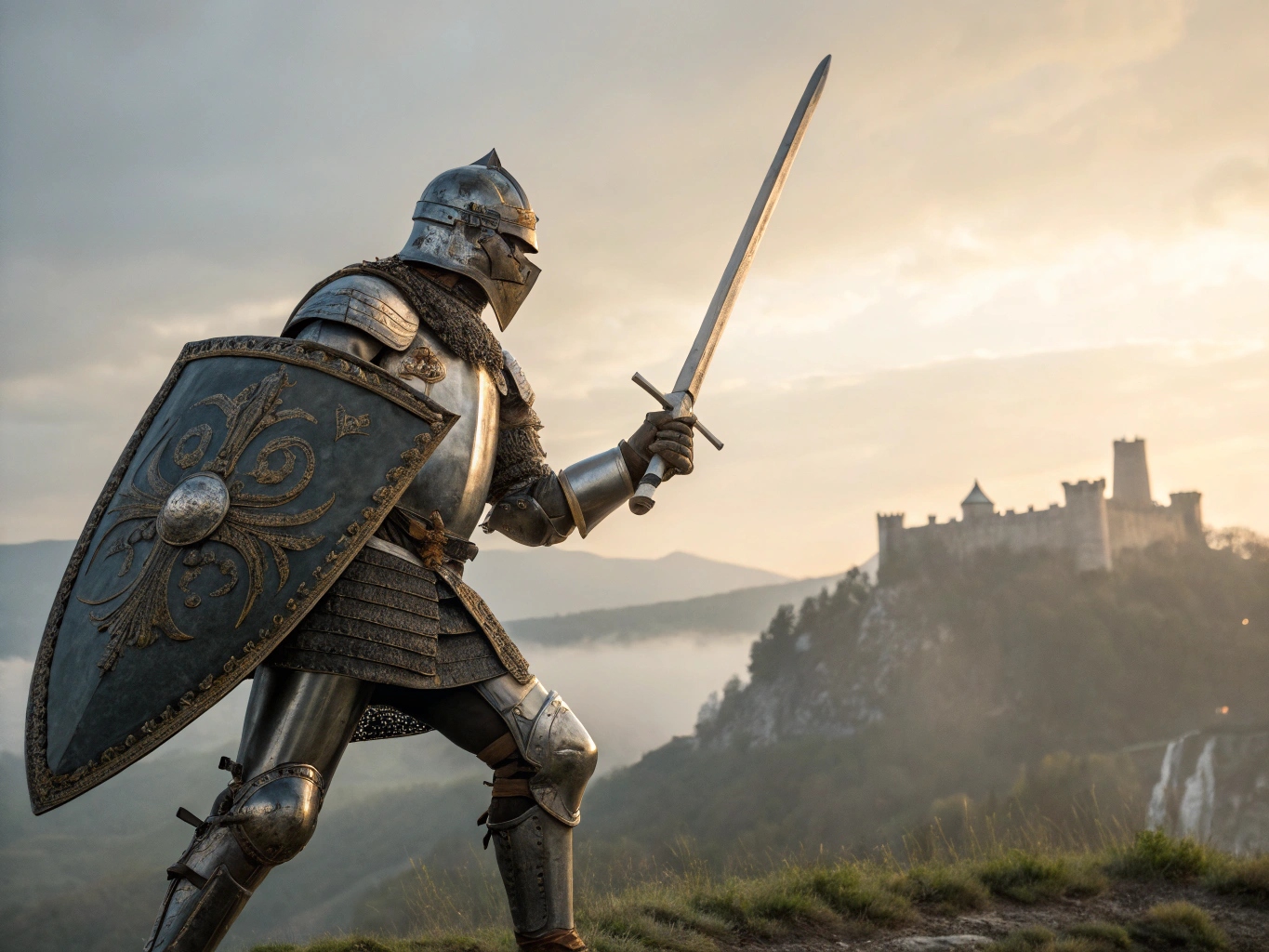
The Legacy of the Knight’s Code
These seven rules weren’t static laws—they evolved across centuries and geographies. From Norman France to Crusader Jerusalem to Plantagenet England, interpretations varied. Some knights upheld the code to legendary degrees. Others, like the infamous mercenary knights or Black Prince’s campaigns, fell short.
Still, the medieval knight code left an enduring impact on modern values—shaping everything from military ethics to superhero ideals. Chivalry today may seem archaic, but its roots remain in our reverence for courage, integrity, and service.
Conclusion: Living the Legacy
To be a knight in the Middle Ages was to shoulder more than armor. It meant living by a higher rule, a sacred oath, a warrior code that transcended the battlefield. These 7 rules of knighthood forged not only elite fighters but moral exemplars whose lives were meant to inspire.
Whether through faith, fealty, protection, courage, or humility, the medieval knight sought to harmonize power with principle. In doing so, he carved out a legacy that still echoes through tales, temples, and timeless ideals.