
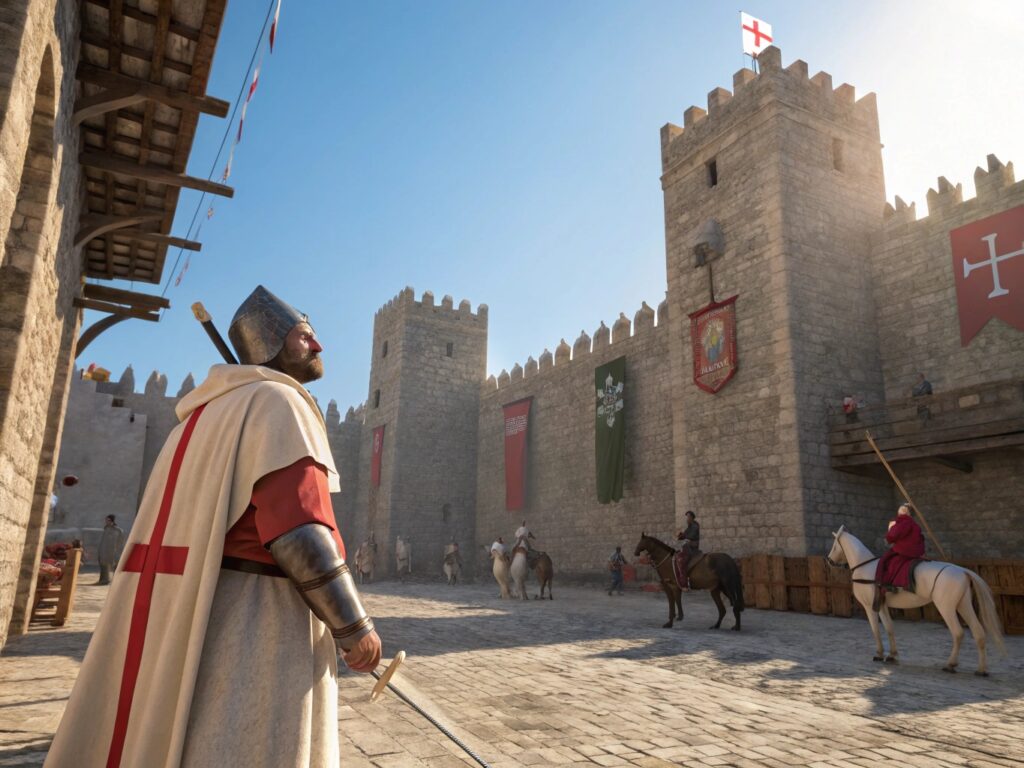
When most people think of the Knights Templar, they envision grim-faced warriors charging into battle under the blazing red cross. Yet behind the mystique of their chainmail and the legends of the Crusades lay a life of rigid structure, spiritual devotion, and communal discipline. The Templar knight daily life was not ruled by the sword alone—it was a complex fusion of monkhood, military training, and sacred service.
In this article, we step beyond the battlefield and into the daily routine of a medieval Templar knight. Through prayer, silence, labor, and obedience, these warrior-monks upheld a strict code that guided not just their battles, but their every breath.
1. Dawn Begins with Prayer and Discipline
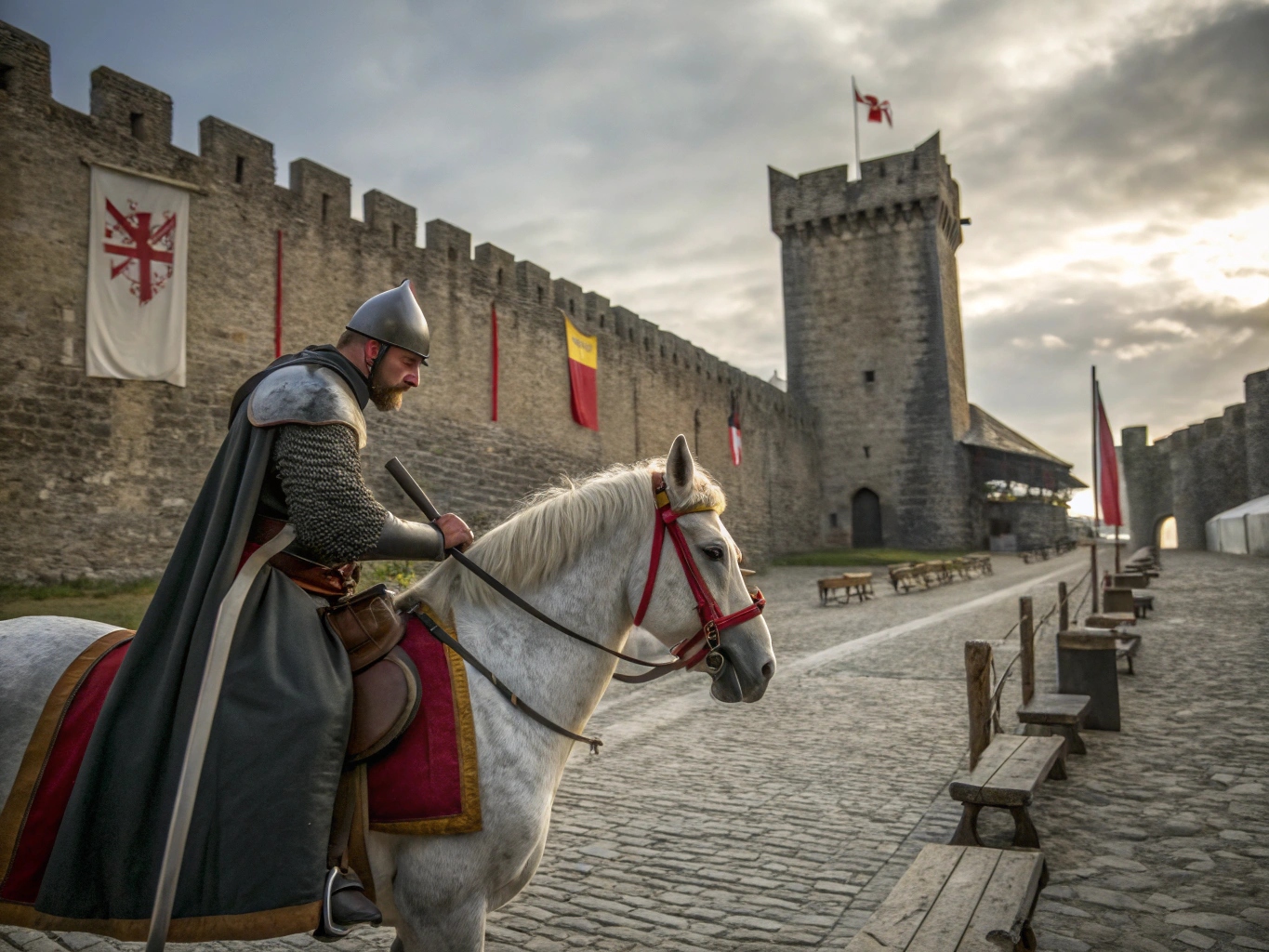
Every day in a Templar knight’s daily life began before the sun crested the horizon. At the first light, the brothers gathered silently in the chapel for Matins, the first of several daily prayers. Unlike secular knights, Templars followed a monastic schedule rooted in the Rule of the Templar Order, based on the Cistercian Rule of Saint Benedict.
Prayer was not a passive part of life—it was the cornerstone. Each day was punctuated by multiple canonical hours, including Prime, Terce, Sext, None, Vespers, and Compline. Even in military camps or while on campaign, these hours were observed as much as possible.
This rigid spiritual routine reflected their core identity: soldiers of Christ first, warriors second.
2. Communal Meals in Silence
After morning prayers, the knights would gather in the refectory (dining hall) for a modest breakfast, usually bread and wine or broth. Silence was strictly observed during meals, with one brother reading aloud from scripture or religious texts while the others ate.
Templars ate in common, sitting at long wooden tables. Meat was restricted, and fasting was frequent—especially on Fridays and during Lent. Meals reflected their vow of poverty and humility, even though the Order itself became famously wealthy.
Food was sustenance, not pleasure. This mirrored the broader ethos of Templar knight lifestyle: restraint, simplicity, and obedience.
3. Training for Holy War
Though bound by monastic rules, the Templars were elite soldiers—and their rigorous military training was central to their identity. Daily life for a Templar knight included hours of martial practice: horseback riding, swordsmanship, archery, and formation drills.
Training was not just about individual skill—it emphasized discipline and unity. Templars fought in close, organized ranks. Breaking formation was forbidden. The strength of the Order lay in its unwavering cohesion, whether storming a Saracen fortress or holding a defensive line.
Even their armor and weapons were standardized: white mantles with red crosses, chainmail hauberks, kite shields, and longswords. Their appearance was austere but terrifying in its uniformity.
4. Manual Labor and Stewardship
The daily life in the Templar order wasn’t all prayer and warfare. Many hours were devoted to manual labor and administration. Templars managed vast estates, farms, vineyards, mills, and banking operations across Europe and the Holy Land.
Each Templar house or commandery required management: cooking, cleaning, tending livestock, maintaining weapons and armor. While the warrior class had squires and servants, all were expected to contribute. The idea of humility through labor was deeply embedded in the Templar worldview.
In quieter postings, a Templar knight might spend more time in stewardship than in battle—especially in Europe, where the Order’s financial empire grew rapidly.
5. Vows of Poverty, Chastity, and Obedience
Templars took sacred vows that governed every aspect of their lives. Poverty meant owning nothing—no private money, property, or possessions. Even horses and weapons belonged to the Order. All wealth flowed into a central treasury.
Chastity forbade marriage, romantic relationships, or sexual contact. Templars were forbidden even to kiss women—not even their own mothers or sisters.
Obedience was absolute. The Master of the Order held supreme authority, and disobedience was harshly punished. A Templar knight who violated the Rule could face penance, imprisonment, or expulsion.
These vows transformed knights from independent warlords into instruments of a spiritual-military machine unlike anything Europe had ever seen.
6. Nightly Reflections and Sacred Rest
Evening in a Templar commandery was a time for quiet reflection. After Vespers and supper, the brothers gathered for Compline, the final prayer of the day. The lights dimmed, and silence enveloped the halls.
Knights slept in shared dormitories, often fully clothed or even in partial armor, ready for sudden attack. Each knight kept his sword and belt nearby—always prepared for battle, even in sleep.
Dreams were considered sacred. If a knight experienced a vision, it was often shared with the chaplain or master. The inner life of a Templar was as active as the outer one, focused on purity, vigilance, and closeness to God.
7. Punishments, Penance, and Brotherhood
The Templar knight daily life was not immune to error or weakness. Rules were strict, and punishments could be severe. Offenses like speaking without permission, disobedience, gluttony, or cowardice were dealt with publicly.
Penalties included fasting, isolation, demotion, or forced penance in chains. Yet despite their harshness, the Templars also emphasized brotherhood. A fallen knight could be forgiven through sincere contrition and service.
Each brother was responsible for the spiritual well-being of the others. Confession, mutual correction, and communal prayer forged a unity stronger than steel.
The Dual Nature of a Templar’s Life
The Templar knight lifestyle was a paradox—at once ascetic and militant, peaceful and warlike, humble and powerful. These men lived by a daily routine that fused monastic devotion with warrior discipline.
They were not mercenaries or noblemen living in luxury. They were servants of a higher cause, believing that every action—eating, praying, fighting—could bring them closer to salvation. Their austere lives reflected a deep commitment to God, their brothers, and their mission.
Legacy of the Templar Routine
Though the Order was disbanded in the early 14th century, the daily life of a Templar knight left a lasting legacy. Their combination of spiritual dedication, logistical discipline, and military prowess influenced the development of later military orders and even modern institutions.
Today, they are remembered not just for their role in the Crusades, but for the powerful code by which they lived. Behind every battle charge and sacred vow was a routine of quiet discipline that shaped the destiny of nations.
Conclusion: More Than Myth
Beneath the myths and mystery, the Templars were men of habit—bound by faith, forged by discipline, and united by duty. Their daily life was not romantic, but rigorously structured. Through prayer, fasting, training, and communal labor, they lived each day as a sacred offering.
To understand the Knights Templar, we must not only study their battles but walk alongside them in the quiet hours between. It is there—behind the chainmail—that the true legacy of these warrior-monks resides.