
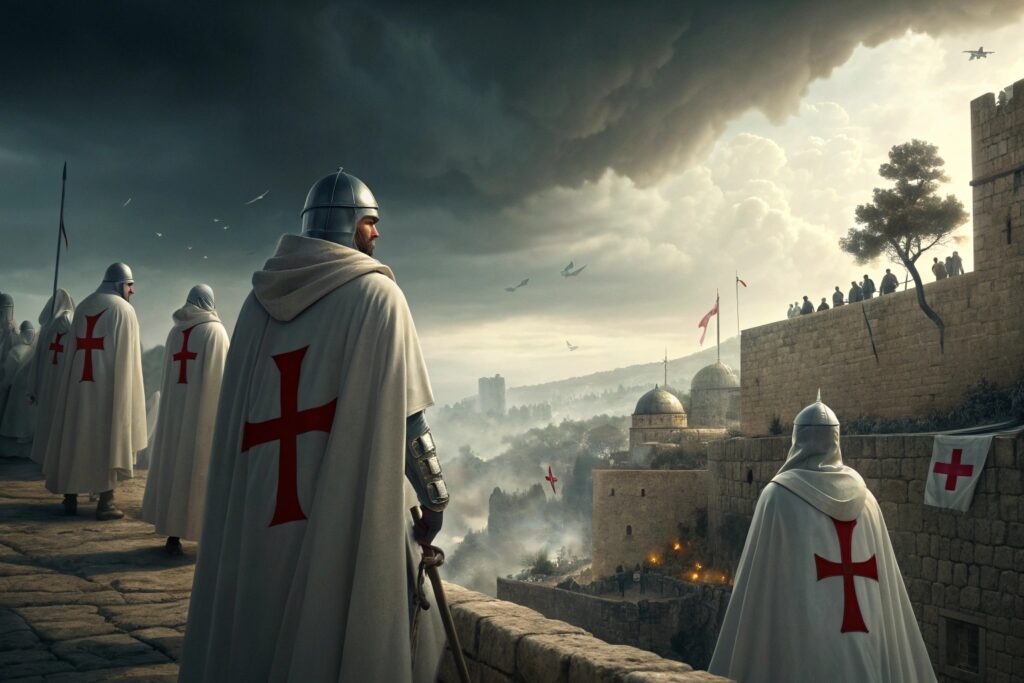
The Middle Ages were a time of deep faith, fierce wars, and powerful symbolism. Among the most enduring legends is that of the Knights Templar—not only as warriors of Christ but also as guardians of mysterious knowledge. Some chroniclers and modern historians suggest that the Templars were tied to apocalyptic visions in medieval Europe, inspiring speculation that they were seen as defenders during the final battles of humanity. But what do we really know about Templars and apocalypse beliefs?
This article explores the medieval fascination with the end of the world, the Templars’ role in it, and how medieval end-times prophecy shaped the way people viewed these enigmatic warrior-monks.
Apocalyptic Fears in Medieval Europe
For medieval Christians, the apocalypse was not a distant fantasy—it was an imminent possibility. Wars, plagues, and famines seemed to confirm what Scripture foretold: that the end of the world was always near. Apocalyptic visions in medieval Europe were common in sermons, chronicles, and even art.
Key influences included:
-
The Book of Revelation: Its vivid imagery of the Four Horsemen and final battles shaped European imagination.
-
Joachim of Fiore’s prophecies: This 12th-century monk predicted dramatic shifts in history leading to the final age of the Holy Spirit.
-
Crusading rhetoric: Leaders often framed battles in the Holy Land as part of God’s cosmic plan, setting the stage for end-times struggles.
Within this worldview, it is not surprising that many began to view the Templars as spiritual protectors, almost like guardians of the apocalypse.
The Rise of the Templars
Founded in 1119, the Templars quickly became one of the most powerful religious-military orders in medieval Europe. Their official purpose was to protect pilgrims in the Holy Land, but their role soon expanded to fighting in the Crusades and managing vast financial networks.
Because of their influence, secrecy, and sacred mission, they became linked with supernatural legends. To a deeply religious society, these warrior-monks seemed perfectly positioned for apocalyptic battles: disciplined, holy, and militarily formidable.
Some medieval writers speculated that the Knights Templar and end of the world were connected, casting the order as both literal and symbolic warriors of Revelation.
Templars and Medieval End-Times Prophecy
So where did the link between the Templars and the apocalypse come from? The connection is partly theological, partly cultural:
-
Jerusalem as the Center of Prophecy
Medieval Christians believed the final battle of good and evil would unfold in the Holy Land. Since the Templars were based there, their role seemed destined to be tied to the apocalypse. -
The Temple of Solomon
The Templars’ name came from their headquarters on the Temple Mount. To medieval minds, this sacred site was tied to biblical prophecy, making the Templars central figures in apocalyptic imagination. -
Crusades as Holy War
Preachers often described the Crusades as precursors to the final judgment. The Templars, as elite Crusaders, were easily seen as chosen soldiers for that cosmic battle. -
Symbolism in Rule and Ritual
The order’s vows, strict hierarchy, and cross insignia lent them an aura of divine destiny, fueling stories that they held secret knowledge about the end of the world.
These elements tied the Templars to medieval end-times prophecy, whether they wanted the association or not.
Apocalyptic Imagery in Templar Legends
Medieval Europe thrived on stories, and the Templars became woven into apocalyptic legends. Chroniclers described them as:
-
Protectors of relics: Some believed they safeguarded sacred items like the Holy Grail or fragments of the True Cross, vital for the last days.
-
Defenders against Antichrist: Tales emerged that the Templars would rise to fight Antichrist’s armies in Jerusalem.
-
Keepers of prophecy: Whispers suggested that the Templars held secret writings about the end of the world.
While much of this was legend, it reinforced the idea of the Templars as guardians of the apocalypse, destined to stand at the final crossroads of history.
The Trial of the Templars and Apocalyptic Fear
Ironically, the Templars’ downfall in the early 14th century also carried apocalyptic undertones. In 1307, King Philip IV of France accused the order of heresy, leading to their arrest and eventual suppression.
Rumors spread that the Templars had fallen because of corruption, fulfilling prophecies of decline before the end. Others believed their persecution was itself a sign of approaching judgment. When the last Grand Master, Jacques de Molay, was burned at the stake in 1314, some chroniclers even described his death as part of a divine drama of sin and redemption.
Thus, the history of the Knights Templar and end of the world became further entangled with fear, prophecy, and legend.
Apocalyptic Visions in Medieval Europe: Broader Context
It’s important to remember that the Templars were not alone in being linked with end-times beliefs. Throughout Europe:
-
Peasant uprisings were fueled by visions of a coming savior-king.
-
Prophets and mystics spread messages of impending judgment.
-
Artists and preachers painted vivid images of fire, angels, and beasts from Revelation.
The Templars, however, stood out because of their military and spiritual power. For many, they were not just soldiers—they were symbols of hope in humanity’s ultimate battle.
Templars as Guardians of the Apocalypse
So were the Templars truly guardians of the apocalypse? Historically, there is no evidence they held secret knowledge of the end times. Yet in cultural memory, they became entwined with the narrative of salvation and final judgment.
The combination of their sacred mission, association with Jerusalem, and mysterious aura made them ideal figures onto which medieval people projected their fears and hopes. To a world that lived under the constant shadow of plague, famine, and war, the Templars represented both defense and destiny.
Conclusion
The story of the Templars is not only one of Crusades and treasure but also one of myth and prophecy. For many in the Middle Ages, the order was tied to medieval end-times prophecy and apocalyptic visions in medieval Europe, casting them as protectors in the ultimate spiritual conflict.
While modern historians see these beliefs as symbolic rather than factual, the image of the Templars and apocalypse beliefs endures. Their legacy reminds us that medieval people lived with an ever-present expectation of the end of days—and that they often sought heroes to serve as guardians of the apocalypse.
In the Templars, they found both warriors and symbols, embodying the hope that when the final battle came, God’s chosen defenders would be ready.