
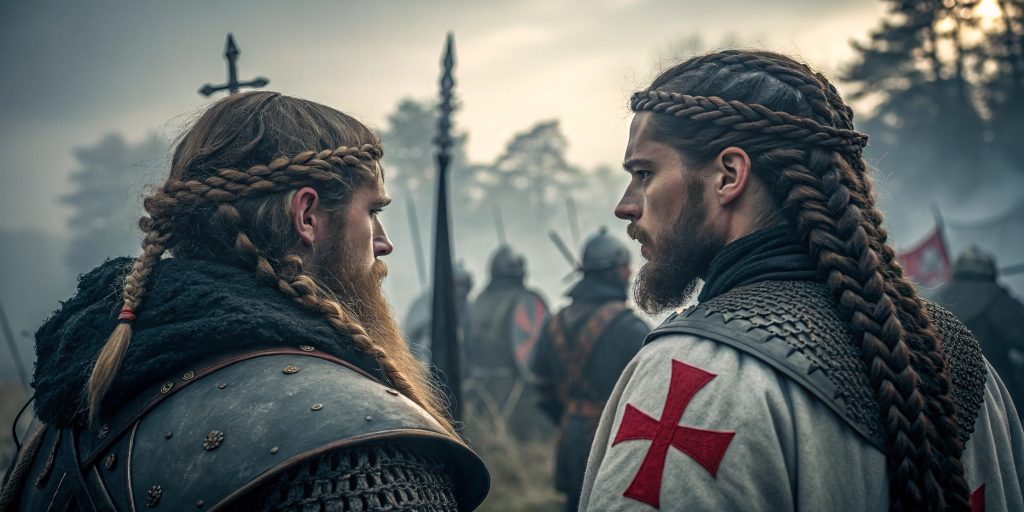
The medieval period was a mix of culture, warfare, and fashion. Hairstyles showed a person’s values and role in society. Templar knights, known for their bravery and faith, carefully styled their hair for battles and ceremonies.
These hairstyles were practical for fighting, keeping hair out of the face. They also had deep meaning in ceremonies. This article examines how medieval hairstyles, like those of Templar knights, have shaped today’s trends.
From simple styles for battle to fancy ones for ceremonies, Templar haircuts are full of history and culture. We’ll explore these styles, from short hair to elaborate designs. They show the importance of hair in medieval times.
Introduction to Medieval Hairstyles
The medieval period lasted for many centuries. It saw a variety of hairstyles that showed who you were, your social status, and where you came from. These hairstyles were key to the culture of the time, showing differences in classes, jobs, and places.
The Templar Knights had extraordinary hairstyles that showed their strength and group identity. Learning about medieval hairstyles helps us better understand life back then. Hairstyles ranged from fancy braids to elegant styles, demonstrating the values and traditions of the time.
Medieval hairstyles, including short hair, were more than just fashion. They tell us about the rich life of the era, showing both daily life and big events.
The Importance of Hair in the Middle Ages
In medieval times, hairstyles were more than just for looks. They were a big fashion statement. Hair showed who you were, where you stood in society and your gender.
Hairstyles could mean many things. They could show your rank and faith, even if you were part of a group like the Templar Knights.
How people took care of their hair showed what society valued. Men and women had hairstyles that showed their place in society. Noblewomen wore fancy braids to show their status, and knights had simple cuts to show they were ready for battle.
- Hairstyles signify gender distinctions, including long hair for women and shorter cuts for men.
- Symbolism in hairstyles denoted religious commitment or affiliation with orders like the Templars.
- Practical considerations guide choices in hairstyles and balance aesthetics and functionality.
In summary, hair was vital in the Middle Ages. Medieval haircuts allowed people to talk without words, tell stories of social and cultural values, and shape how they saw each other.
Historical Medieval Hairstyles: A Deep Dive
Templar Knights’ hairstyles were more than looks. They were deeply rooted in culture and practicality. These styles showed their roles as warriors and symbols of faith. They also mirrored the broader medieval styles of their time.
Key Characteristics of Templar Knight Hairstyles
Templar knight hairstyles had unique features that set them apart. Some critical traits included:
- A common use of braids, often intertwined for practical reasons.
- Shaving specific parts of the head symbolized purity and commitment.
- Longer hair is worn during ceremonies to reflect their noble status and purpose.
These elements showed the mix of practicality and symbolism in their hairstyles. They highlighted the Templar Knights’ dedication to their order and beliefs.
Variations Across Different Regions
Regional differences greatly influenced the Templar Knights’ hairstyles. Different cultures added their touches, leading to varied styles. For example:
- In France, knights combined long hair with intricate plaiting, reflecting local fashion trends.
- English Templars might have favored shorter medieval haircuts for battle ease.
- Italian knights added local flair with embellishments and accessories to their hair.
Templar knight hairstyles were not the same everywhere. They showed a rich mix of cultural influences, adding to their medieval identity.
Hair Preparation for Battle
Grooming was critical for Templar knights in the heat of battle. It made them look good and served a purpose. A neat knight looked confident and ready, which was crucial in fights.
Significance of Grooming Before Combat
Grooming was crucial for Templar Knights. It showed they were disciplined and paid attention to details. A clean look boosted the morale of the knight and their friends.
It helped them stay focused on the fight. In a time when looks mattered, a neat hairstyle showed their honor.
Common Products Used for Hair Care
Medieval hair care used natural oils to keep hair shiny. Templar Knights used herbal sprays to keep their hair in place. These products helped them look good and stay focused.
These simple grooming tools were vital in a time without modern hair care. They showed how important hair care was for warriors.
Ceremonial Hairstyles of Templar Knights
Ceremonial hairstyles were essential for Templar Knights on formal days. They showed their status and commitment and highlighted the grandeur of their rituals and ceremonies.
At these big events, hair was carefully done. Many techniques and accessories were used to look polished in 14th-century male hairstyles.
Hairstyles for Formal Occasions
For big events, Templar Knights chose fancy hairstyles. These showed their authority and elegance. Some common styles were:
- Long hair styled back, showing dignity.
- Elegant braids with ribbons showing noble blood.
- Simple styles with Templar accessories, mixing practicality and style.
These hairstyles balanced tradition and beauty. They made sure the knights looked right for serious ceremonies.
The Role of Accessories: Circlets and Coils
Hair accessories were vital to the look, adding to the splendor. Important ones were:
- Circlets: These headbands were fancy and made of precious metals and stones. They showed bravery and nobility.
- Coils: Hair coils made styles more attractive, adding texture and design.
- Pins: Decorative pins kept hairstyles in place, ensuring they looked good all day.
These accessories made the hairstyles more sophisticated. They also showed the Templar Knights’ pride in their heritage. The mix of hairstyles and accessories showed their high status in society.
Medieval Hairstyles for Men: The Templar Influence
Hairstyles in the medieval period were more than just fashion. They showed the culture and values of the time. The Templars greatly impacted men’s hairstyles from the 12th to the 15th century. This section looks at short and long hairstyles, showing how they have changed.
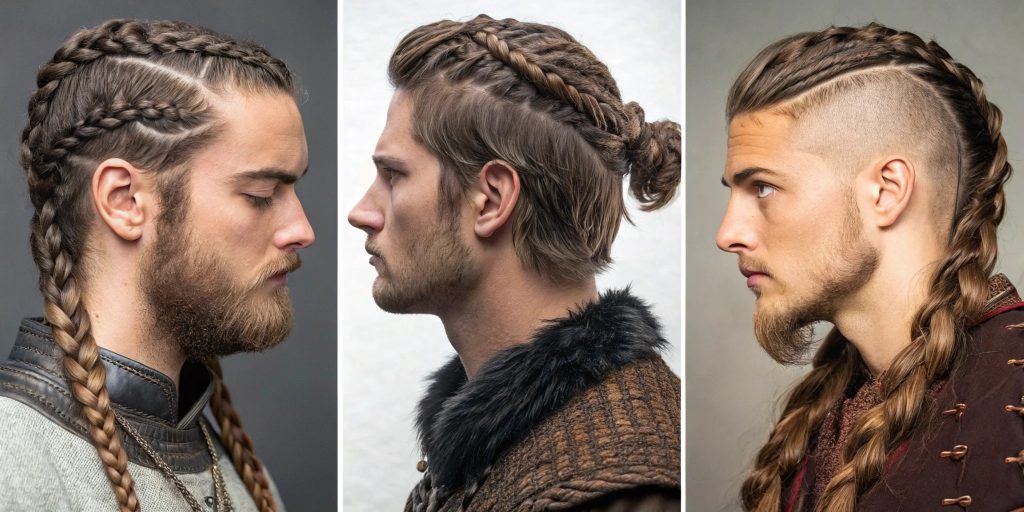
Short and Long Hair: Popular Styles
Medieval hairstyles were very different. Short hair was practical, especially for warriors like the Templars. It showed discipline and readiness for battle.
Long hair, on the other hand, showed nobility and style. Knights often had flowing hair, which they kept in place with accessories.
Styles from the 12th to 15th Century
The 12th to 15th century saw significant changes in men’s hairstyles. Early styles were simple, but later ones got more complex, with braids and curls. The Templars’ influence was strong, mixing function with elegance.
This shows how 14th-century hairstyles male were vital in showing identity and status back then.
Women in the Middle Ages: Hairstyles and Fashion
Women in medieval times showed their identity and status with hairstyles and accessories. In the Templar era, they wore intricate braids and decorative headpieces, which showed their marital status and social rank.
Women’s Medieval Hairstyles During the Templar Era
Women’s hairstyles in the Templar era were elegant and modest. Popular styles included:
- Long, flowing hair was often plaited into elaborate braids.
- Styles adorned with ribbons and threads for added decoration.
- Hair worn partially up, integrating curls that cascaded down the back.
These hairstyles showed personal taste and followed social norms. They emphasized femininity and modesty.
The Use of Veils and Headpieces
Veils and headpieces were vital in women’s hairstyles. Common items were:
- Wimples, which covered the neck and shoulders, provided a dignified appearance.
- Circlets made of metal or fabric symbolize marital status and wealth.
- Long veils are often associated with brides or women in higher social classes.
Each accessory added to a woman’s look and showed her social position in the Templar era. The mix of these elements showed the link between fashion and identity in medieval times.
The Evolution of Hairstyles: From Early Medieval to the 15th Century
Hairstyles changed a lot during medieval times. They went from simple to fancy, which shows how culture changed how people groomed themselves.
Transitioning Styles Through Centuries
Hairstyles have changed with the times. In the early days, hair was short or in simple braids. But by the 15th century, hair became longer, and styles became more complex.
Styles included loops and knots. This change showed people wanted to express themselves through their hair.
Influence of Cultural Factors on Hairstyling
Culture shaped hairstyles. The Vikings brought new styles to Europe, and trade routes helped share beauty ideas and hairstyles.
The rise of the merchant class also changed things. Hairstyles became symbols of status and identity.
Common Hair Techniques Used by Templar Knights
The Templar Knights used different hair techniques. These showed their life as warriors and their duties in ceremonies. They liked braids and plait styles for both looks and practicality. Pins and veils helped keep these styles in place.
Types of Braid and Plait Styles
Braids and plait styles were critical for hair management in battles and ceremonies. They kept their hair neat while wearing armor. Some common styles were:
- Simple braids for easy, secure styles.
- Fishtail plaits for a detailed look.
- Multi-strand braids for showing off skill.
The choice of hairstyle depended on the occasion. Knights mixed practicality with elegance.
Fastening and Accessories: Pins and Veils
Keeping hairstyles in place was important. Knights used many accessories, like:
- Hairpins from metal or wood to hold braids and plaits.
- Veils with embroidery to show rank and status at ceremonies.
- Decorative bands or cords for extra flair and to keep hair in place.
These items were not only valuable, but they also showed the Templars’ identity and values—for example, their hair techniques mixed form and function.
Influence of Templar Hairstyles in Modern Fashion
Templar hairstyles still shape today’s fashion. They connect old styles with new looks. Braids and fancy accessories are back, linking to the past but fitting today’s trends.
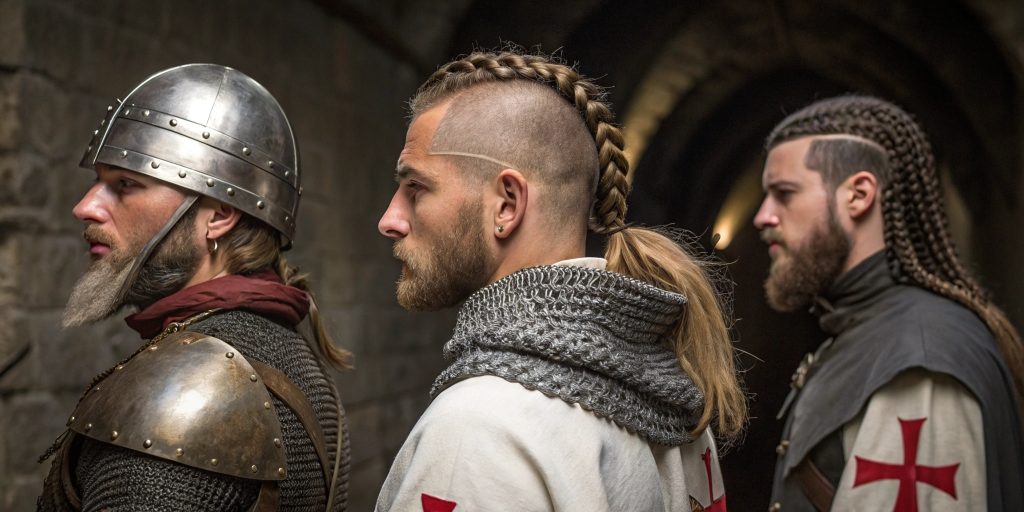
Designers look to these medieval styles for inspiration. This shows how these old looks stay relevant in today’s fashion.
How Historical Styles Inspire Today’s Trends
Today’s hairstyles echo the elegance of the Templar knight. Braids, both simple and complex, are significant in style. They show how old styles refresh modern fashion, adding creativity to hair.
Continued Popularity of Braid and Accessory Styles
Braids are a hit with fashion lovers. They’re practical and let people express themselves—medieval-inspired accessories, like hairpins and bands, spice up modern hairdos.
This trend shows how today’s culture values and updates old styles. It keeps these classic elements popular.
Conclusion
Exploring medieval hairstyles gives us a peek into the past. It shows how people saw themselves and their culture. For Templar knights, hair was more than just a style. It helped them in battles and special events.
Their haircuts told a lot about their lives and values. This shows how vital hair was back then.
Looking at Templar knights’ hairstyles reveals a lot. Their hairstyles showed their honor, bravery, and loyalty. This summary shows how hair helped shape their identity in medieval times.
Today, Templar hairstyles still inspire new trends. They remind us of the beauty and stories of the past. This shows how Templar knights’ haircuts are still important today.