
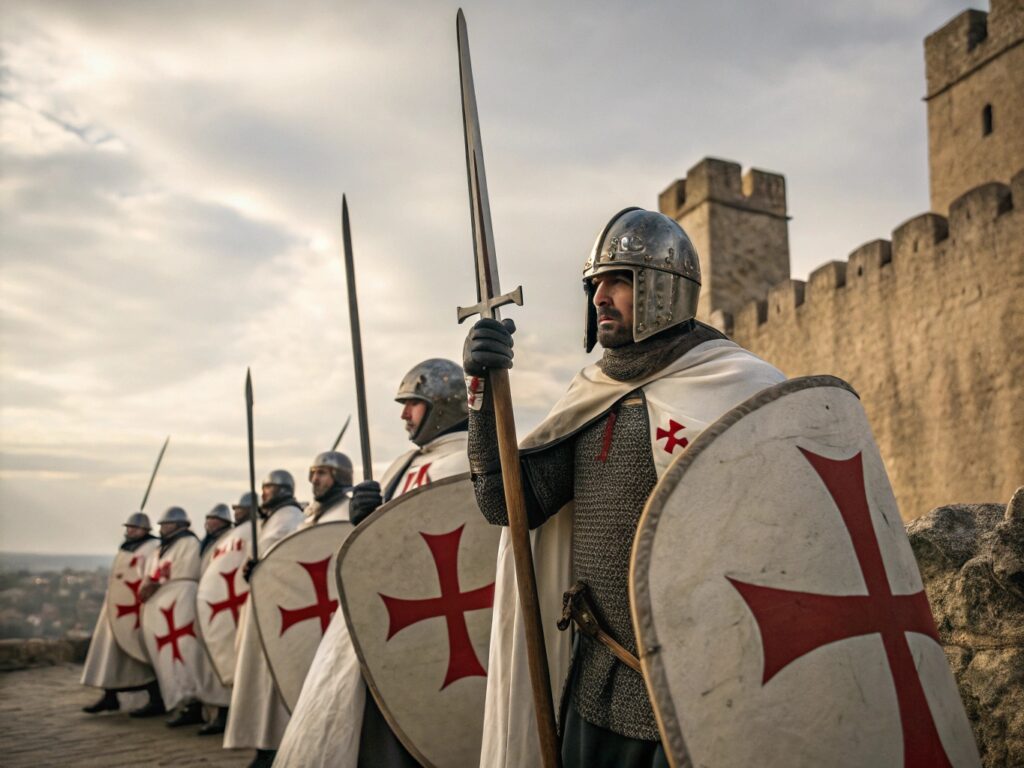
In an age defined by violence and faith, few figures captured the tension between spirit and steel like the Templar monk warriors. Cloaked in white mantles adorned with red crosses, the Knights Templar stood as paradoxes—men who knelt in silent prayer by candlelight and stormed enemy lines by daylight. They were warriors by trade, yet monks by vow.
How did the Templars merge two seemingly incompatible worlds—monastic devotion and military aggression? This article explores the sacred architecture of their lifestyle, the spiritual discipline behind their martial prowess, and the inner logic of a brotherhood that lived as mystics with swords.
1. Born of War, Rooted in Faith
The Order of the Poor Fellow-Soldiers of Christ and of the Temple of Solomon, known simply as the Knights Templar, was founded in Jerusalem around 1119 AD. At the time, the Crusader Kingdoms were besieged by constant threats, and Christian pilgrims needed protection along treacherous roads to the Holy City.
But the founders of the Templar Order envisioned something more profound than armed escorts. They created the first monastic military order, where knights would take holy vows and live under a strict religious rule—just like monks.
Inspired by Cistercian spirituality and guided by Bernard of Clairvaux, the Templars adopted a life that balanced asceticism, obedience, and sacrifice with elite battlefield readiness.
2. The Three Vows of the Templar Warrior Monk
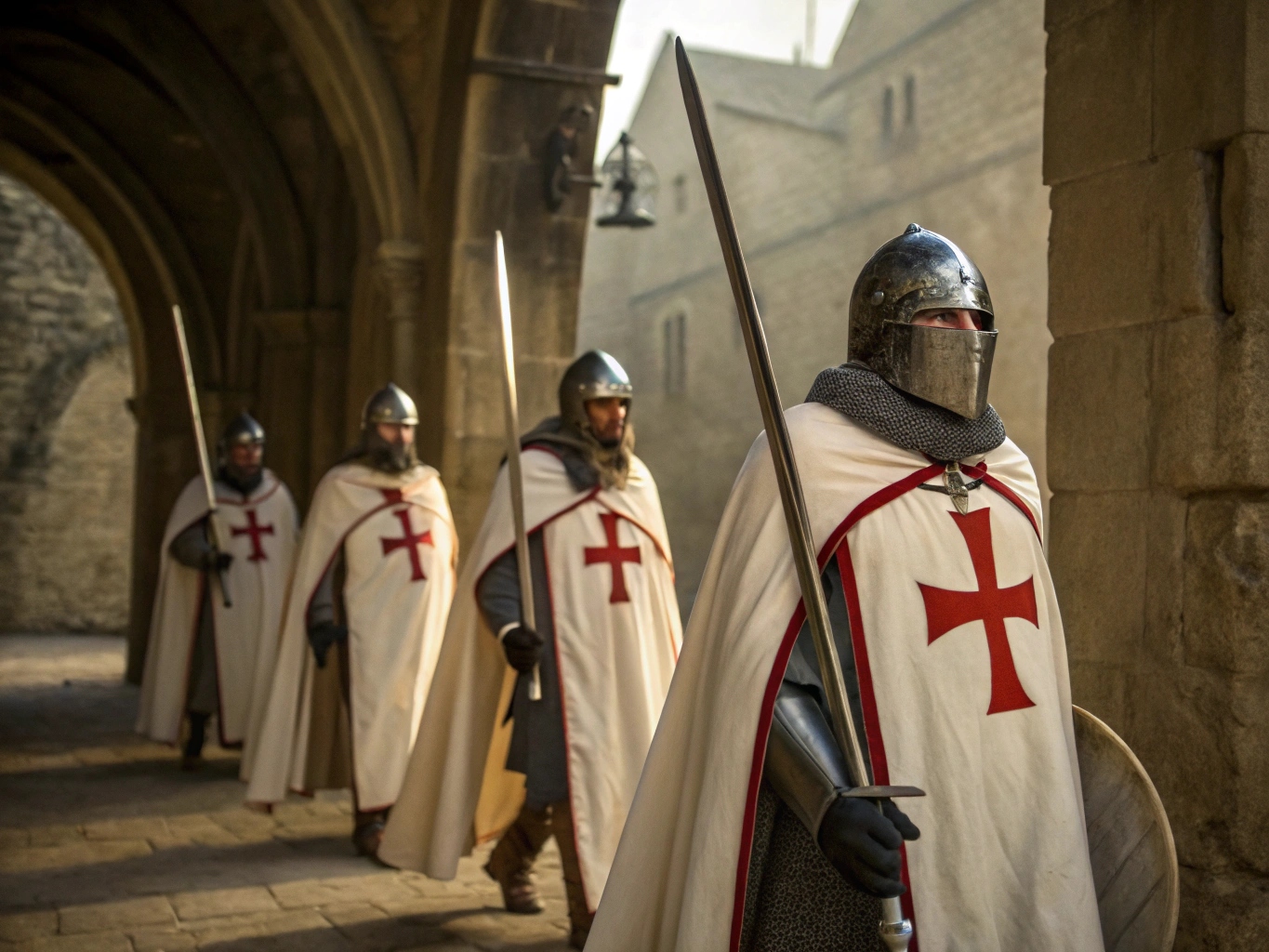
Like monks in traditional abbeys, Templars swore to uphold the three sacred monastic vows:
-
Poverty: No knight owned private wealth. All arms, horses, clothing, and even their food were the property of the Order. This vow ensured that personal ambition did not corrupt their spiritual mission.
-
Chastity: Templars abstained from sexual relations and romantic entanglements. Even kissing a woman, including one’s mother or sister, was forbidden. Their hearts were to remain undivided—devoted only to God and the brotherhood.
-
Obedience: Perhaps the most demanding, obedience required total submission to the Rule and the Master of the Order. Whether in monastery or battlefield, a Templar obeyed without hesitation.
These vows transformed rugged knights into spiritual warriors of the Crusades, guided not by personal glory but by divine purpose.
3. The Daily Life of a Templar Warrior Monk
A typical day in the life of a Templar warrior monk was a seamless blend of prayer, discipline, and preparation for war. The brothers observed canonical hours of prayer—Matins, Lauds, Prime, Terce, Sext, None, Vespers, and Compline—whether in a church or on campaign.
Between prayers, they trained constantly: jousting, swordsmanship, archery, horseback maneuvers, and military formations. Even their meals were taken in silence, accompanied by scripture readings. Fasting was frequent, and meat consumption was limited.
Templars lived in community, slept in dormitories, and followed rituals that mirrored monastic life. Yet their monasticism had a martial edge—always alert, always armored in spirit and steel.
4. Spiritual Warfare and Holy Combat
To modern eyes, the fusion of religion and warfare may seem contradictory. But in the medieval mindset, holy combat was a way to serve God directly. Templars were not mercenaries—they were spiritual soldiers fighting a divine enemy.
Their battle cry was not “glory,” but “Non nobis, Domine”—“Not unto us, O Lord, but unto Thy name give the glory.”
Templars believed that dying in battle against infidels was a form of martyrdom. This belief fueled their fearlessness in combat and their willingness to defend their faith to the death. Battles were often preceded by confession and prayer, reinforcing the idea that every charge was an act of worship.
In this way, the Templars became the ultimate spiritual warriors of the Crusades, fusing the ideals of monkhood with the duties of the knight.
5. Mystical Discipline: Beyond Battle
Though famed for their military might, many Templars lived far from the battlefield. In European commanderies, they oversaw farms, hospitals, and banking networks, all under the same spiritual discipline as their brothers in the East.
Templar mysticism focused on internal purification—rejecting vanity, embracing suffering, and meditating on divine truths. Silence, fasting, and repetitive prayer were spiritual exercises meant to tame the flesh and awaken the soul.
Some accounts even suggest Templars practiced esoteric contemplation, merging Eastern Christian practices with Western asceticism. While much of their mysticism was destroyed or suppressed after their downfall, hints of it remain in medieval texts and architectural symbolism.
This hidden spiritual dimension is what made them more than soldiers—they were mystics with swords, seeking both victory on Earth and grace in eternity.
6. The Rule of the Templars: A Code for the Soul
The Templar way of life was governed by the Latin Rule, a comprehensive document of 72 original clauses (eventually expanded to over 600) outlining how Templars should eat, pray, sleep, train, and even speak.
This Templar monastic rule emphasized:
-
Silence in common areas
-
Wearing simple, uniform garments
-
Sleeping fully clothed, ready for battle
-
Avoiding luxuries and personal grooming
-
Sharing all resources equally
The Rule treated war as a sacred discipline—akin to monastic labor. Even punishments for disobedience were spiritual in nature, often involving fasting, isolation, or public penance.
The Rule was what turned individual warriors into a single militant monastic body—an army bound not just by strategy, but by sacred code.
7. The Legacy of the Warrior Monk Ideal
Though the Templar Order was dissolved in the early 14th century under charges of heresy, their spiritual legacy endured. The blending of monasticism and warfare laid the groundwork for later military orders like the Hospitallers and Teutonic Knights.
Their model even echoes in modern ideals: the disciplined soldier guided by principle, the ethical warrior who sees battle as a moral duty.
Templars proved that mysticism and martial valor could co-exist—not in contradiction, but in harmony. They fought not for land or gold, but for a kingdom they believed was eternal.
Conclusion: When Steel Served Spirit
The Templar monk warriors were neither mere monks nor ordinary knights. They were spiritual craftsmen of the battlefield, forging holiness through hardship, and seeing in every enemy not just a threat—but a trial of faith.
To modern readers, their way of life may seem impossible—a holy war, a silent feast, a chapel lit by swords. Yet the Templar fusion of mysticism and warfare reveals a profound truth: that the soul, when disciplined, can wield even the sword without losing its sanctity.
In every chant and every charge, the Templars strove to answer a single, eternal call—to be warriors not for glory, but for God.