
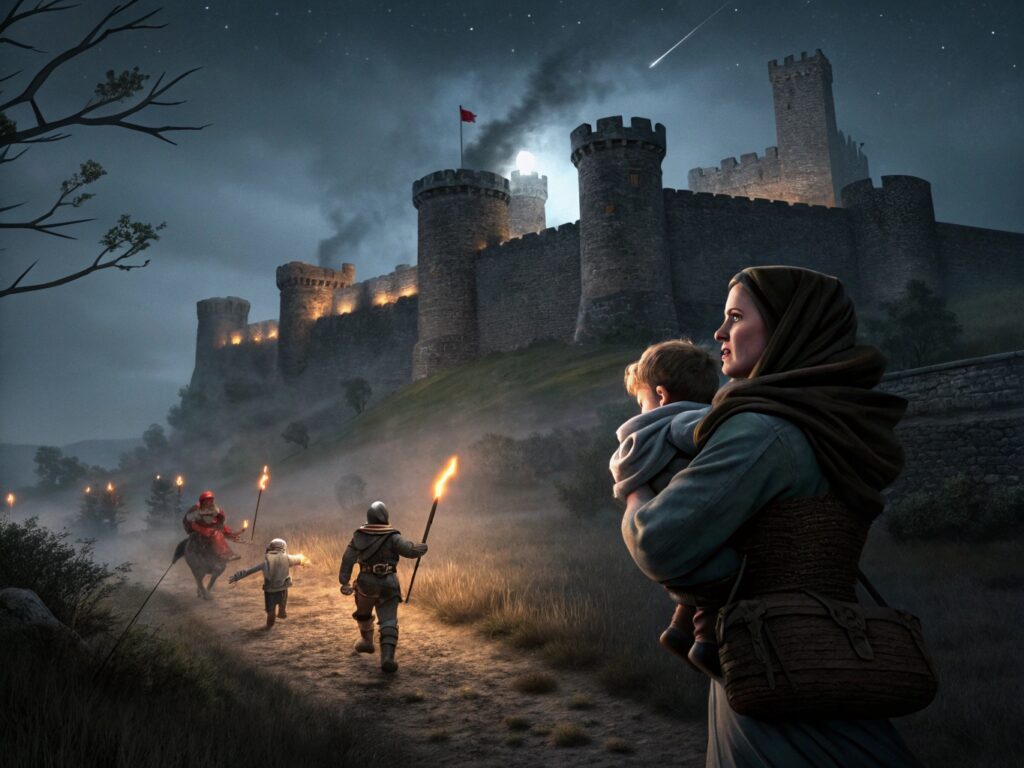
The Fall of the Templars in the early 14th century is one of the most dramatic chapters in medieval history. The Knights Templar persecution, launched by King Philip IV of France and supported by Pope Clement V, not only dismantled one of the most powerful military orders of Christendom but also left thousands of families struggling to survive. When we imagine the Templars, we often see knights in white mantles with red crosses. But behind them were brothers, wives, children, and entire communities whose lives were thrown into turmoil during the Templar suppression.
This article explores not just the fate of the knights, but also how Templar families survived persecution, adapted to a hostile world, and carried fragments of the Templar legacy forward through generations.
The Rise and Sudden Fall of the Templars
The Knights Templar were founded in the early 12th century as defenders of pilgrims traveling to the Holy Land. Over two centuries, they grew into one of the wealthiest and most influential religious orders. They owned castles, lands, farms, and even pioneered early banking systems.
Yet, their wealth and independence drew envy. In 1307, King Philip IV, deeply in debt to the order, orchestrated their downfall. On October 13 of that year, he ordered the mass arrest of Templars in France. Under accusations of heresy, idolatry, and corruption, many knights were tortured and executed.
By 1312, under pressure, Pope Clement V officially dissolved the order. This moment marked the Fall of the Templars, but it was only the beginning of a much quieter struggle: the survival of their families and dependents.
What Happened to Templar Families After the Persecution?
While history often focuses on the trials and executions of the knights, the question remains: what happened to Templar families after the persecution? Many knights had relatives—parents, siblings, cousins—who relied on the wealth and protection of the order. When their lands were confiscated, entire households faced ruin.
-
Confiscation of Lands: Templar estates were seized and transferred to the Hospitallers or the crown. Families living on Templar lands suddenly found themselves dispossessed.
-
Loss of Protection: Villagers who worked under the Templars’ patronage were left vulnerable to new lords, often harsher and less fair.
-
Stigma of Association: Relatives of Templars carried the shadow of accusation. Being tied to “heretics” could ruin one’s chances of marriage, trade, or advancement.
The Inquisition and the Templars extended its reach beyond the knights themselves, creating ripples of fear across the medieval social order.
Survival Strategies of Templar Descendants
Despite the hardships, many Templar descendants and relatives found ways to endure. Their survival strategies reveal both resilience and adaptability:
1. Blending into Society
Some families changed surnames, abandoned old titles, and assimilated into new communities to escape suspicion. In regions less hostile than France, Templar kin could quietly live as merchants, farmers, or minor nobles.
2. Relying on Marriage Alliances
Marriage became a powerful tool for survival. By marrying into loyal or wealthy families, Templar heirs secured protection and financial stability. Women, in particular, played a key role in preserving lineages through strategic unions.
3. Preserving Wealth in Secret
Legends persist that not all Templar wealth was confiscated. Some families may have hidden resources—gold, relics, or documents—that allowed them to weather persecution. While myths often exaggerate, there is evidence that smaller caches of valuables were smuggled away.
4. Faith and Resilience
Perhaps most importantly, many families clung to faith. Despite accusations of heresy, the Templars and their kin were deeply rooted in Christianity. Prayer, local churches, and community support offered strength when legal protections collapsed.
Life After the Templar Trials
The life after the Templar trials varied depending on region. In France, where persecution was harshest, families faced confiscation and ruin. In England, where King Edward II hesitated to prosecute, Templar relatives experienced less disruption. In Portugal, the Order of Christ absorbed Templar assets, providing a smoother transition for dependents.
This uneven treatment shaped the destiny of medieval families across Europe. Some sank into obscurity, while others flourished under new names and institutions. For example, Portuguese Templar traditions lived on and even influenced the Age of Exploration.
The Human Side of the Persecution
When we think of medieval persecution, we imagine trials, dungeons, and public executions. But behind the spectacle were everyday people:
-
A widow who lost her home because her husband served the Templars.
-
Children branded with the stigma of “heretic’s blood.”
-
Farmers forced to work under harsher lords after Templar estates were seized.
These stories of quiet endurance highlight the family resilience in the Middle Ages. It was not just knights who bore the weight of persecution, but entire households.
Hidden Templar Networks After the Fall
Though the order was officially dissolved, whispers of hidden Templar networks continued. Descendants may have safeguarded relics, manuscripts, or even rituals in secret. Some historians suggest these families played roles in shaping later movements such as Freemasonry.
While much of this remains speculative, one truth endures: the Templar legacy survived because families carried memories, traditions, and stories even when the institution itself was destroyed.
Myths, Legends, and the Templar Legacy
Over the centuries, legends about Templar treasure, secret survival, and descendants multiplied. While historians sift fact from fiction, it is clear that the Templar legacy remained powerful. Families who once feared stigma could, in later centuries, claim pride in their association.
In some places, surnames and traditions hint at continuity. Elsewhere, folklore turned the Templars into symbols of resistance against tyranny. For many, the story of their persecution and survival became a parable of resilience and faith.
Why the Templar Story Still Matters
The Knights Templar dissolution was not just a tale of knights and kings. It was a story of communities shaken by politics, families struggling under oppression, and individuals forced to adapt. It reminds us that history is not only about power, but also about the endurance of ordinary people.
Even today, we ask: How did medieval families protect themselves during persecution? Their answers—adaptation, alliances, hidden faith—still resonate in a world where communities continue to face injustice and displacement.
Conclusion: From Ruin to Legacy
The Fall of the Templars shattered one of the most powerful orders in medieval Europe. Yet, through resilience and adaptation, Templar families survived persecution and carried fragments of memory forward. Whether through hidden treasures, marriage alliances, or whispered traditions, the human side of the Templar story reveals endurance against overwhelming odds.
As we look back, we see not only knights in chains but also families who endured, persevered, and shaped the centuries that followed. The Templar descendants may have vanished into the pages of history, but their spirit of survival remains a lasting testament to faith and resilience in the face of medieval persecution.