
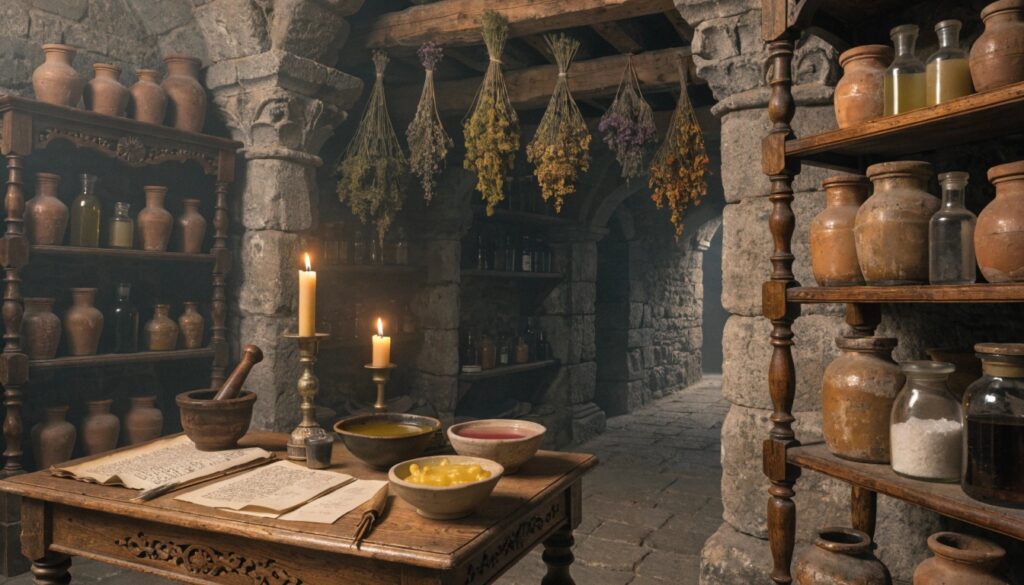
Today’s beauty industry is filled with advanced formulas, luxury serums, and professional tools, from botanical ampoules to high-tech spa equipment for estheticians. But centuries before modern aesthetics existed, people in medieval Europe developed their own skincare systems using herbs, oils, animal fats, and mineral-based preparations. During the era of the Knights Templar, skincare in the Middle Ages was shaped by faith, medicine, climate, and available trade goods. Surprisingly, many medieval skincare products laid the foundation for remedies that are still recognized in natural beauty today.
In this article, we explore medieval skincare products, Knights Templar skincare practices, and the ingredients that defined skincare in the Middle Ages.
Understanding Skincare in the Middle Ages
To understand skincare in the Middle Ages, we must first understand the environment. Medieval Europe faced harsh weather, limited sanitation systems, and minimal chemical knowledge. Yet grooming and personal care still played an important role in daily life.
While popular myths suggest medieval society neglected hygiene, historical records and archaeological findings show otherwise. Bathing traditions varied by region, but herbal washing, scented waters, and oil applications were common. Skincare was not cosmetic in the modern sense – it was functional. It aimed to protect, heal, and preserve.
For religious military orders like the Knights Templar, discipline and purity were core values. Cleanliness was often tied to spiritual integrity.
Knights Templar Skincare Practices: Discipline and Simplicity
The Knights Templar were warrior monks, bound by strict rules of conduct. While their focus was spiritual and military, grooming remained part of personal discipline. Knights Templar skincare practices were likely simple and utilitarian.
They would have used:
-
Olive oil for moisturizing and protection
-
Herbal-infused waters for cleansing
-
Basic animal fat salves for dryness
-
Natural balms for wound care
Because many Templars operated in the Holy Land during the Crusades, they were exposed to Middle Eastern medicinal knowledge. This cultural exchange introduced European knights to ingredients such as rosewater, myrrh, frankincense, and exotic oils.
These influences shaped medieval beauty remedies across Europe.
Olive Oil: The Foundation of Medieval Skincare
One of the most important medieval skincare products was olive oil. Widely available in the Mediterranean, olive oil served multiple purposes:
-
Skin moisturizer
-
Wound treatment
-
Hair conditioning oil
-
Massage oil
Olive oil creates a protective barrier against environmental damage. In an era without formulated creams, it was a versatile and effective solution.
Modern natural skincare in the Middle Ages might sound primitive, but olive oil remains a staple in clean beauty lines today.
Rosewater and Floral Distillations
Trade routes connected Europe with the Middle East, allowing rosewater to become one of the most valued medieval beauty remedies. Rosewater was prized for its fragrance and soothing properties.
Uses of rosewater included:
-
Facial cleansing
-
Skin soothing
-
Redness reduction
-
Refreshing tonics
Distillation methods advanced during the medieval period, especially in the Islamic world. These techniques eventually spread into Europe, influencing Crusader era cosmetic practices.
Today, rosewater toners and hydrosols are common in modern skincare routines, reflecting the continuity of tradition.
Animal Fats and Healing Balms
In colder regions of Europe, animal fats were frequently used as moisturizers. Rendered tallow or lard could be blended with herbs to create protective salves.
Medieval herbal skincare recipes often included:
-
Tallow
-
Beeswax
-
Lavender
-
Sage
-
Rosemary
These combinations created thick balms that shielded the skin from wind and cold. While texture and refinement were limited compared to modern creams, the principle of barrier repair was well understood.
Modern dermatology emphasizes lipid balance and moisture retention – concepts medieval people applied intuitively.
Herbal Infusions and Apothecary Knowledge
Monasteries and apothecaries were centers of medical knowledge. Monks cultivated medicinal gardens filled with herbs used for healing and skincare.
Common plants used in medieval skincare products included:
-
Chamomile for calming irritated skin
-
Calendula for wound healing
-
Sage for cleansing
-
Thyme for antibacterial properties
-
Yarrow for inflammation
These ingredients were steeped in oils or water to create medicinal preparations.
Natural skincare in the Middle Ages relied heavily on botanical knowledge passed through generations.
Mineral and Clay Treatments
Clay was another widely used material in skincare in the Middle Ages. Different types of clay were applied to the skin for cleansing and purification.
Clays absorbed excess oil and impurities. Although medieval science lacked chemical analysis, empirical observation showed that clay improved skin texture.
Modern detox masks operate on the same principle.
Hygiene and Bathing Practices
Bathing practices in medieval Europe varied widely. Public bathhouses existed in many cities during certain periods, though later social and religious shifts reduced their popularity.
Knights and nobles often bathed using:
-
Warm water infused with herbs
-
Vinegar-based rinses
-
Fragrant oils
While Crusader era cosmetic practices did not resemble modern spa treatments, bathing was still associated with refinement and social status.
Medieval Beauty Remedies for Common Skin Conditions
Medieval texts reference treatments for:
-
Dryness
-
Rashes
-
Sunburn
-
Wounds
-
Scarring
Treatments often combined oil bases with medicinal herbs. Honey was also used due to its antibacterial properties.
Although some remedies were based on superstition, many medieval beauty remedies had practical merit.
Grooming and Masculine Aesthetics
Skincare in the Middle Ages was not exclusive to women. Knights maintained beards, hair, and skin as part of their image.
Knights Templar skincare practices likely emphasized neat presentation rather than ornamentation. Groomed appearance conveyed strength and discipline.
In today’s world, male grooming has become a rapidly expanding industry. Beard oils, moisturizers, and aesthetic treatments reflect a continuation of historical priorities – just with advanced technology.
Cultural Exchange During the Crusades
The Crusades created unprecedented cultural contact between Europe and the Middle East. European knights encountered advanced medical knowledge, including distillation techniques and botanical remedies.
Crusader era cosmetic practices were influenced by:
-
Persian perfumery
-
Arabic distillation science
-
Levantine herbal medicine
These exchanges enriched European apothecary traditions and expanded the range of medieval skincare products.
The Role of Faith in Skincare
Spiritual purity often paralleled physical cleanliness. Religious texts referenced washing as symbolic renewal.
For the Templars, ritual cleansing may have held spiritual significance. While their grooming was likely minimalistic, maintaining personal hygiene supported discipline and order.
This connection between ritual and routine mirrors modern wellness culture, where skincare is often seen as self-care rather than vanity.
Comparing Medieval and Modern Skincare
Although modern skincare is scientifically formulated, its core concepts are familiar:
| Medieval Ingredient | Modern Equivalent |
|---|---|
| Olive oil | Plant-based facial oils |
| Tallow balm | Barrier repair creams |
| Rosewater | Hydrating toners |
| Herbal infusions | Botanical serums |
| Clay | Detox face masks |
What differs most is refinement and safety regulation. However, the foundational logic remains similar.
What Did People Use for Skincare in Medieval Times?
To answer the long-tail question directly – what did people use for skincare in medieval times?
They used:
-
Olive oil
-
Animal fats
-
Beeswax balms
-
Herbal infusions
-
Clay
-
Honey
-
Rosewater
Skincare in the Middle Ages was built around protection, healing, and simplicity.
The Legacy of Medieval Herbal Skincare Recipes
Medieval herbal skincare recipes were handwritten in manuscripts and passed down through generations. Many modern herbalists still study these texts.
Calendula salves, chamomile compresses, and honey masks have direct roots in medieval formulations.
Natural skincare in the Middle Ages was sustainable and locally sourced. Today’s clean beauty movement echoes that philosophy.
Final Thoughts
Medieval skincare products were not luxurious by modern standards, but they were practical and resourceful. Knights Templar skincare practices emphasized discipline, protection, and exposure to cross-cultural knowledge during the Crusades.
Skincare in the Middle Ages relied on olive oil, animal fats, herbs, clay, honey, and rosewater. Medieval beauty remedies focused on maintaining skin integrity in a challenging environment.
From Crusader era cosmetic practices to monastic herbal gardens, the foundations of skincare were already being shaped centuries ago. While today’s beauty industry is technologically advanced, many of its principles trace back to the same core idea – protect the skin, nourish it with nature, and respect the environment.
The evolution from medieval herbal skincare recipes to modern formulations proves that innovation often builds on tradition rather than replacing it.