
Behind the shining armor and thunder of crusader battles lay a very different face of the Knights Templar — one of discipline, prayer, and sacred silence.
While history remembers them as warriors, the Templars first saw themselves as monks. Their worship, rituals, and vows were guided by a strict spiritual framework known as the Templar codes, blending Christian monasticism with military life in a way never seen before.
Every battle they fought, every mission they undertook, began and ended in prayer.
To understand their power, one must look beyond the sword and into the chapel — into the quiet rhythm of their souls, where faith was forged in silence.
The Rule That Bound Heaven and Earth
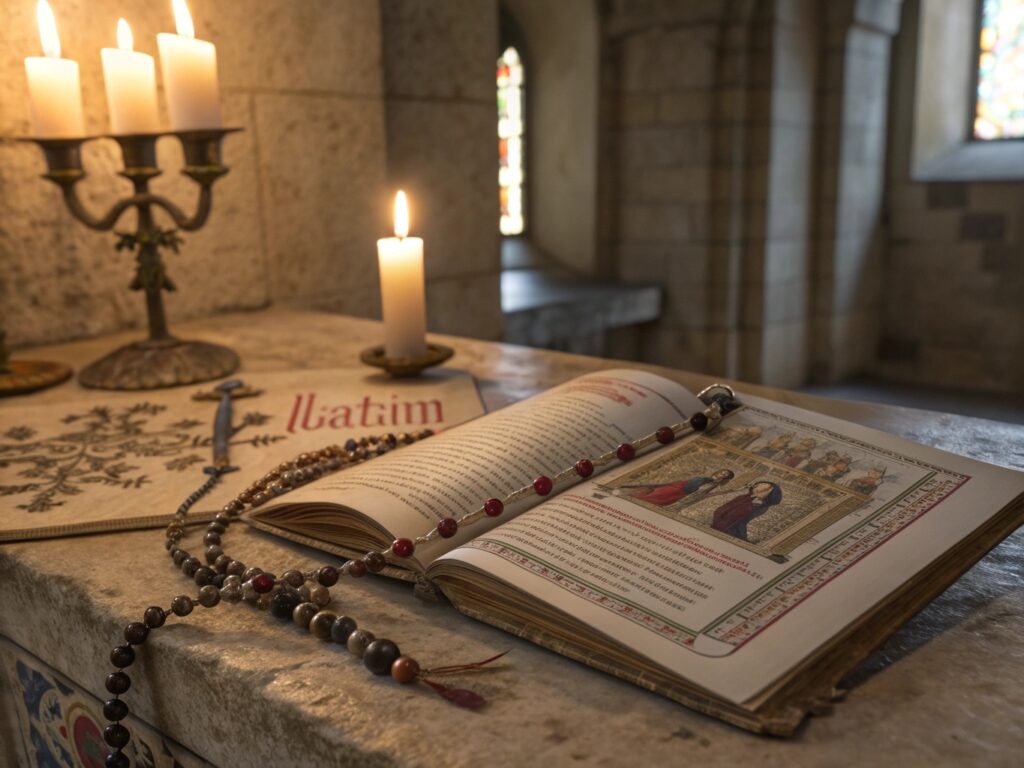
The spiritual discipline of the Knights Templar came from a document known as the Latin Rule, inspired by Bernard of Clairvaux.
This text outlined how every Templar should live, pray, eat, speak, and even think. It described a life of obedience, poverty, and chastity, where service to God came before everything else.
While most knights of the era lived for glory, the Templar lived for devotion. Their days were shaped by Templar prayers and religious rituals, not personal ambition.
The Rule forbade excessive talk, rich clothing, or prideful displays of wealth. Silence was not emptiness — it was a sacred discipline meant to purify the heart and focus the mind on God.
Through spiritual silence, they learned to hear the divine more clearly. The clang of steel was only half their life; the quiet echo of prayer was the other half.
The Hours of Devotion: A Monk’s Rhythm in a Warrior’s Life
The Templars followed a fixed schedule of worship similar to that of monks in Cistercian monasteries.
Each day was divided into liturgical hours, during which they recited psalms, read Scripture, or prayed in unison.
At dawn, they greeted the rising sun with hymns of gratitude; at night, they knelt before candlelight, confessing sins and seeking forgiveness.
Their daily prayers echoed the Divine Office, but adapted for soldiers constantly on the move. When stationed in Jerusalem, the Holy Land, or on campaign, they still kept time by faith — praying even in armor, whispering psalms beneath their helmets.
When a Templar died, his brothers would kneel in complete silence and pray over his body, not as soldiers mourning a comrade, but as monks releasing a soul into eternal light.
It was this unwavering commitment to prayer that gave the order its spiritual strength, even amid the chaos of war.
The Code of Silence: Where Words End and Faith Begins
Among all the vows taken by a Templar knight, one stood apart — the vow of silence.
In a world of boasting warriors and loud feasts, the Templars valued restraint. Silence was more than obedience; it was spiritual armor.
The Templar codes of silence taught that idle words led to sin, pride, and distraction. Speaking only when necessary allowed knights to remain inwardly focused, humble, and ready for divine guidance.
This practice of silent worship reflected their monastic roots, aligning them with the contemplative ideals of the early Church fathers.
Inside the monastery, silence created unity.
Without chatter or argument, the brothers moved as one — eating in silence, riding in silence, even preparing for battle in silence, listening only to the prayers of their commander or chaplain.
This discipline gave them an almost supernatural calm, a presence that awed allies and unnerved enemies.
In that stillness, they believed, Christ spoke most clearly.
Templar Chapels: Sacred Spaces of Stone and Light
Wherever the Templars went, they built chapels and commanderies that doubled as fortresses of the spirit.
Inside these sanctuaries, the architecture reflected their faith — simple, geometric, and full of hidden symbolism.
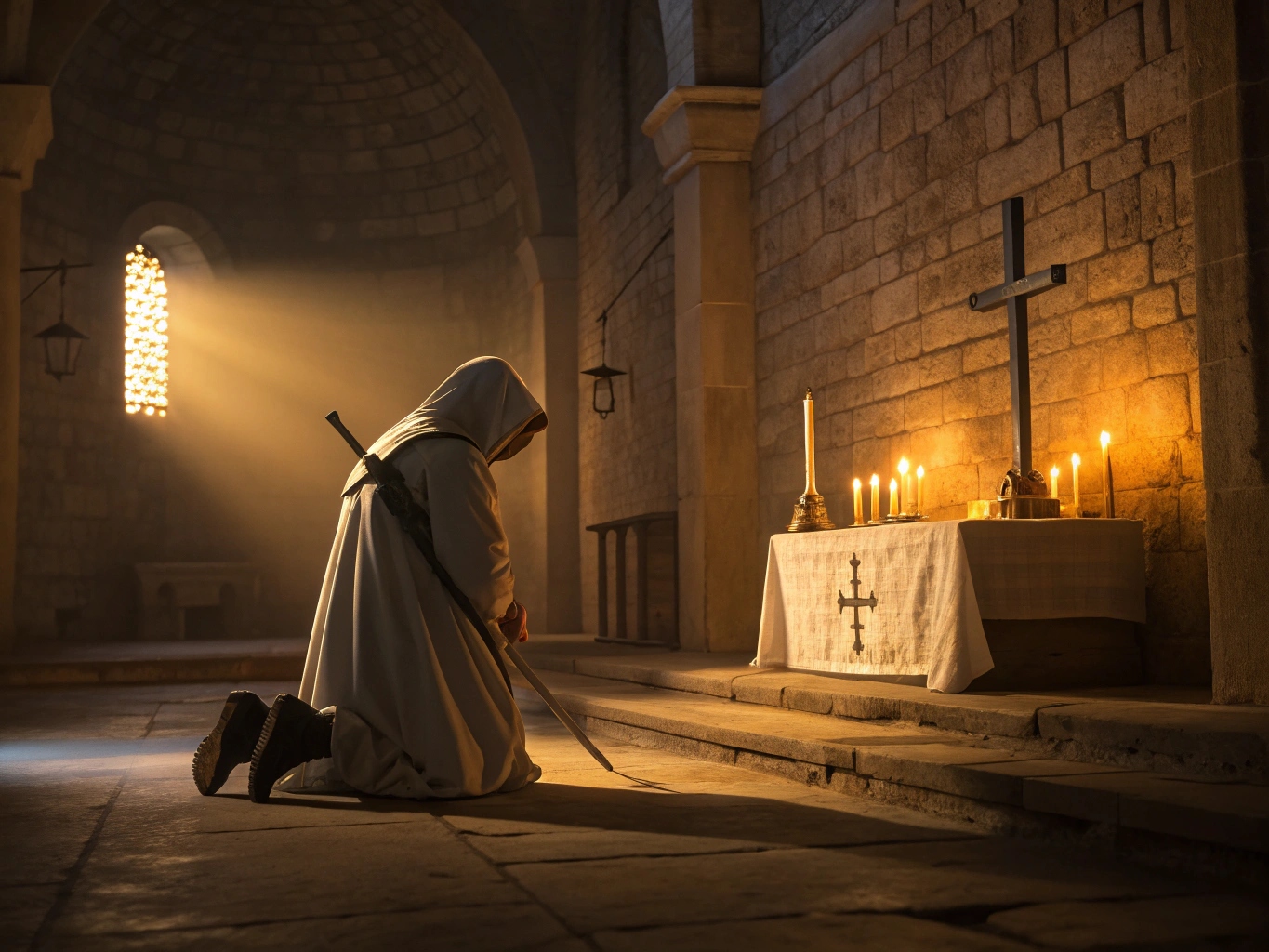
Circular designs represented eternity, echoing the Temple of the Holy Sepulchre in Jerusalem. Carved crosses marked the walls, while candlelight flickered across worn stone, filling the air with sacred stillness.
In these chapels, Knights Templar worshiped together before dawn and after sunset. Their prayers were short but intense — chants of humility, repentance, and gratitude.
Unlike the grand cathedrals of Europe, Templar places of worship were austere. They were built not to impress men but to please God.
Even during campaigns, a small portable altar accompanied them, allowing Templar religious rituals to continue wherever they went.
Before battle, they would kneel, remove their helmets, and pray the Psalm “Not unto us, O Lord, but unto Thy name give glory.”
This verse became their motto — a reminder that victory belonged not to them but to Christ.
Templar Vows: Obedience, Poverty, and Purity
Like monks, the Knights Templar took sacred vows of poverty, chastity, and obedience.
They owned no personal property, slept in communal quarters, and shared everything equally. Their garments were plain — white for purity, with the red cross symbolizing sacrifice.
Each vow carried deep spiritual meaning.
-
Poverty freed them from worldly greed.
-
Chastity allowed them to dedicate their hearts fully to God.
-
Obedience taught them humility and trust in divine command.
These vows reflected the spiritual discipline of Templar life, linking them closely to monastic traditions.
Through obedience, they mirrored Christ’s submission to the Father.
Through chastity, they became spiritual warriors, untainted by earthly desires.
And through poverty, they found the greatest wealth — faith.
This triad of vows, combined with their daily prayers and codes of silence, created a new kind of holiness: a chivalry of the spirit.
Prayer Before the Sword: Faith on the Battlefield
Before any march, siege, or charge, Templar knights prayed.
Their chaplain would bless them with holy water and lead a solemn litany. They confessed their sins, for no man should enter battle unclean before God.
If death came, they wished to meet it with pure hearts.
This prayer before battle wasn’t superstition — it was surrender.
Each knight understood that victory came not from strength or skill but from divine will.
They asked not for triumph, but for courage, and for the salvation of their souls.
Even in the chaos of war, Templar worship continued.
Some knights prayed silently as they fought, repeating verses from Scripture. Others carried relics or small crosses into combat.
To them, battle was a form of living prayer, a sacred duty performed under the eyes of heaven.
The Spiritual Legacy of Silent Worship
When the Order of the Knights Templar was dissolved, their prayers did not vanish.
Echoes of their chants, codes, and vows lived on in later monastic and military orders.
Their devotion to silence and obedience influenced centuries of Christian spirituality, shaping the ideals of discipline, humility, and service.
Modern historians may debate their secrets, but one truth remains: their power came not only from sword or wealth, but from the stillness of their souls.
In silence, they found strength.
In prayer, they found purpose.
And in faith, they found a unity that made them one of the most enduring symbols of Christian devotion and knightly virtue.
Conclusion: The Power of Holy Silence
The Templar prayers and codes reveal a profound truth — that the greatest strength of these warrior monks came not from conquest, but from contemplation.
In a world defined by noise and violence, they created spaces of peace.
Their silent worship, their disciplined lives, and their unbroken devotion to God remain a testament to the idea that true faith often speaks loudest in quiet.
To worship in silence was to stand before God without defense or pride — only surrender.
And for the Knights Templar, that silence was the most sacred sound of all.