
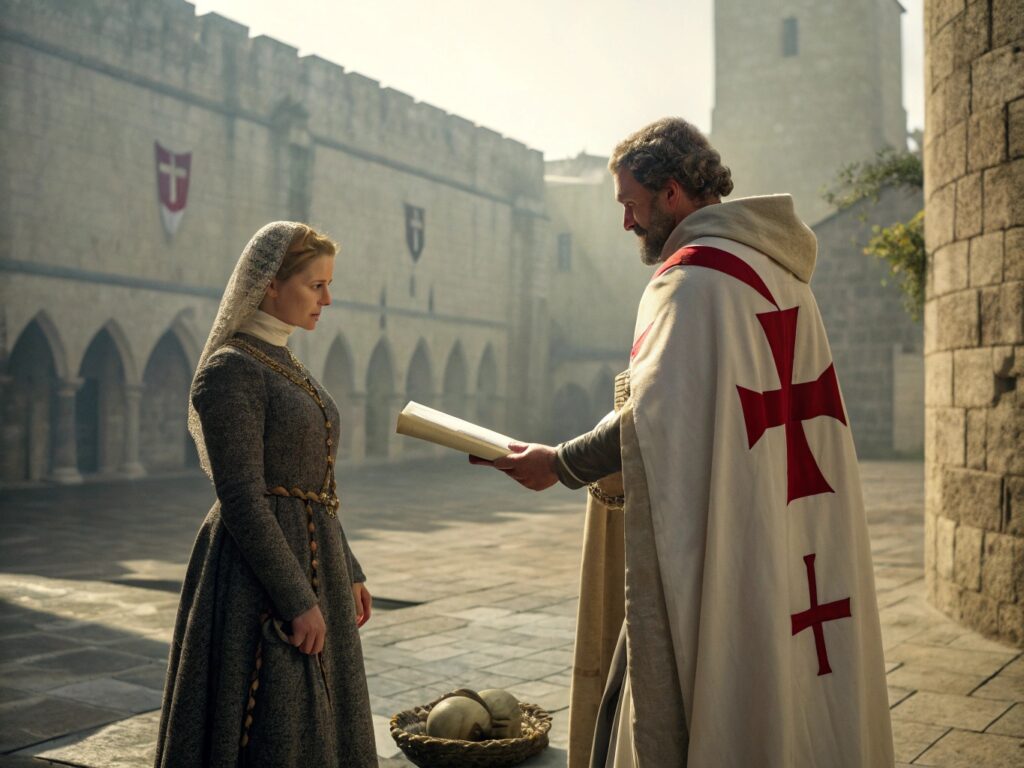
The Knights Templar are usually remembered as armored warriors, bankers of Christendom, and martyrs of persecution. Yet, behind the battlefields and castles stood another force: women and the Templars. From sisters and mothers of Templars to female benefactors who donated lands and resources, women formed a hidden but essential part of the Templar network.
While the order itself barred women from membership, their influence was undeniable. Noblewomen, widows, and mothers shaped the order’s survival through donations, alliances, and protection. Exploring the roles of women in the Templar network reveals how faith, family, and patronage created a foundation for one of the most powerful medieval orders.
Sisters and Mothers of the Knights
Though Templars lived under vows of celibacy, they were sons, brothers, and nephews of noble families. Their sisters and mothers were often the ones who ensured their entry into the order, donating wealth or property as a form of dowry.
-
Mothers of Templars: Many mothers offered estates to secure the spiritual protection of the order for their families. A donation could guarantee prayers for the soul of a deceased husband or child.
-
Sisters of Templars: Sisters often managed family estates while brothers served abroad. Some even became guardians of Templar properties left behind.
By supporting their kin, women played a direct role in the Templar family support system. Their sacrifices strengthened the order’s influence across Europe.
Noblewomen as Benefactors
One of the most significant roles of women in the Templar network was that of the benefactor. Female patrons of the Templars gave donations of land, money, and resources. In return, they received spiritual benefits—prayers, protection, and association with a holy cause.
Examples of Female Benefactors
-
Countess Philippa of Toulouse: Known for supporting the order with land and wealth.
-
Isabel of Conches: A noblewoman who donated property in Normandy.
-
Widowed noblewomen across France and England frequently gave estates in exchange for protection and spiritual remembrance.
These women benefactors of the Templars created a network of support that extended across castles, manors, and farms. Their patronage was vital in establishing the order’s economic base.
Women in Templar Estates and Daily Life
While women were excluded from military service, they were ever-present in the Templar estates.
-
Farm Labor and Management: Peasant women worked the fields of Templar farms, raising crops and livestock that supported the knights’ campaigns.
-
Stewardship: Some noblewomen acted as stewards or administrators for estates granted to the order, managing tenants and ensuring productivity.
-
Hospitals and Hospices: Women often provided care in Templar-run hospitals, aiding pilgrims and the poor.
Thus, women were part of the everyday life on Templar lands, contributing labor, administration, and compassion.
The Role of Widows and Heirs
Widows occupied a special place in the Templar family support system. A woman left without a husband could donate land or wealth to the Templars, gaining both protection and honor.
-
Protection of Estates: By aligning with the Templars, widows ensured that their estates were not seized by rival nobles.
-
Spiritual Patronage: Donations served as prayers for the souls of lost husbands, connecting families to the order’s spiritual mission.
-
Heirs and Daughters: Some daughters inherited Templar-linked estates, preserving connections to the order through marriage or further donations.
These women safeguarding the Templar legacy helped maintain continuity across generations.
Female Donors and Spiritual Motivations
Why did women choose to give their wealth to the Templars? The answer lies in medieval spirituality.
-
Salvation and Memory: Donations secured prayers for the living and the dead.
-
Protection in Life: The Templars’ reputation for strength made them attractive allies for vulnerable women.
-
Piety: Many women saw their gifts as acts of devotion to Christ, aligning with the knights’ holy mission.
Thus, female donors in medieval orders were not only practical benefactors but also spiritual actors, ensuring their families’ place in eternity.
Women and Hidden Treasures
Though most Templar hidden treasures legends focus on knights, women may have played a part in safeguarding wealth. When persecution struck in 1307, some families are thought to have hidden documents, relics, or valuables with female relatives less likely to attract suspicion.
This possibility weaves women into the myths of Templar treasure legends, suggesting they acted as guardians of memory and survival.
Women in the Broader Templar Network
The Templar network was not only military but also familial and spiritual. Women’s influence on the Templars took many forms:
-
Mothers donating dowries to secure their sons’ entry.
-
Noble benefactors funding castles and farms.
-
Peasant women laboring on estates.
-
Widows aligning estates for protection.
-
Female relatives safeguarding legacy and relics.
Each role reinforced the strength of the order, even though women could never wear the red cross themselves.
Decline and Loss: Women After the Fall
When the Templars were suppressed in the early 14th century, the women connected to them also suffered.
-
Loss of Estates: Benefactors saw lands confiscated, sometimes redirected to the Hospitallers.
-
Stigma: Families tied to the Templars carried the shadow of heresy accusations.
-
Survival: Women had to navigate new alliances, remarriage, or adaptation to protect their kin.
This period highlights how women’s influence on the Templars did not end with persecution but continued in the struggle for family survival.
Legacy of Women Benefactors
The legacy of women in the Templar network persists in documents, charters, and folklore. Medieval records often list women among donors, showing how their gifts shaped castles, farms, and chapels. In Portugal, where the order survived as the Order of Christ, noblewomen continued to act as benefactors, extending their influence into the Age of Exploration.
Women may have stood in the background of the Templar story, but their role as sisters, mothers, and benefactors ensured that the order could rise, thrive, and leave a lasting mark on history.
Conclusion: The Invisible Builders of the Templar World
The history of the Templars is incomplete without the women who supported, funded, and preserved their legacy. Whether through noble patronage, family connections, or labor on estates, women built the foundation upon which the knights stood.
The women and the Templars may not have shared the battlefield, but they shared the burden of survival, faith, and endurance. In their hands lay lands, dowries, and hidden treasures that shaped the order’s rise and softened its fall.
In the end, these female benefactors, sisters, and mothers remind us that medieval power was not only forged with swords, but also with gifts, prayers, and family bonds.